Chaco
Explora Nuestras Provincias y sus Riquezas is part of Argentina al Mundo, alongside Argentine Delights, Guía AD-Gourmet and Chefs Argentinos al Mundo.
El Impenetrable. A vast forest of quebrachos and silk floss trees, where the jaguar walks free again alongside the giant anteater and the giant armadillo. This is the Chaco. Land of the Qom, Moqoit and Wichí peoples, of crafts that keep memory alive. From the sky fell the meteorites of Campo del Cielo, and in Resistencia, the city of sculptures, art lives on every corner. Cotton, quebracho and hard-working people. The Chaco is not crossed: it is conquered. The Chaco is the wild heart of Argentina.

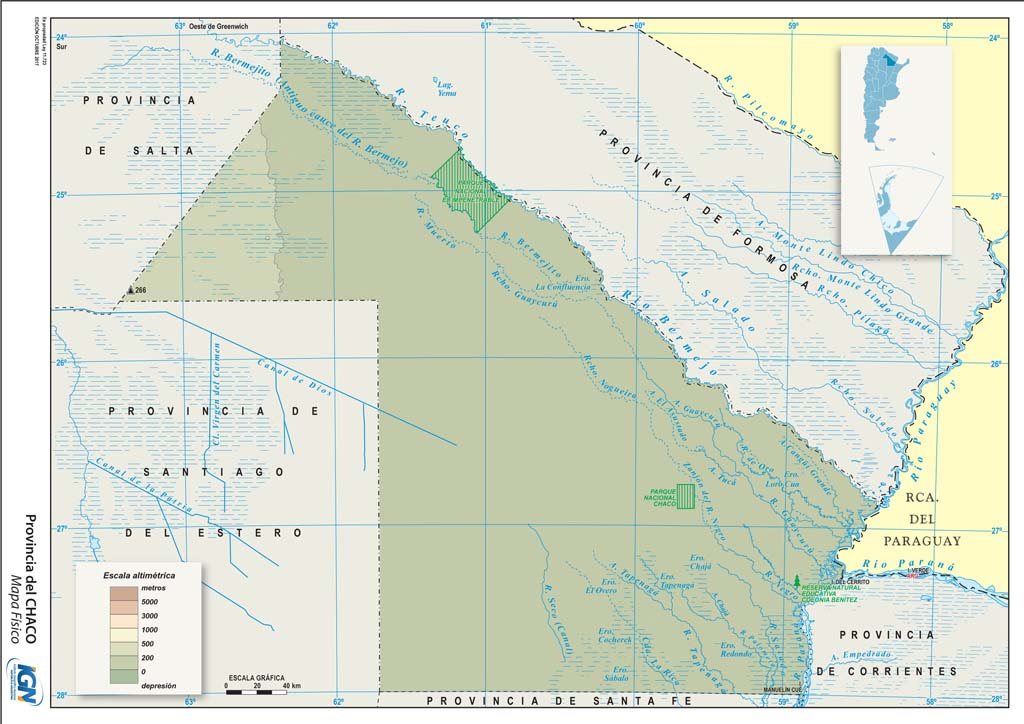
Political map · Source: IGN
- Capital
- Resistencia
- Region
- Northeast
- Area
- 99,633 km²
- Population · 2022 Census
- 1,129,606 inhabitants · 11.3 hab/km²
- Women · Men
- 51.5 % · 48.5 %
- Median age
- 29 years
- By age
- 0 to 14 years: 24.2 % · 15 to 64 years: 67.0 % · 65 years and over: 8.8 %
- Climate
- Subtropical with a dry season; more humid in the east and semi-arid in the west.
- Demonym
- chaqueño/a
- Founding of the capital
- 2 February 1878
- Status
- Province since 1951 · Ley 14.037
- Departments
- 25
- Born in another province · abroad
- 8.3 % · 0.5 %
Sources: INDEC, 2022 National Census (final results) · INDEC / IGN (area) · Provincialization laws · IGN (political division).
- Mean annual temperature
- 21.3 °C
- Annual rainfall
- 1,393 mm
- Mean maximum · warmest month
- 33.4 °C · January
- Mean minimum · coldest month
- 9.4 °C · July
Source: Servicio Meteorológico Nacional (SMN), climatological standard normals 1991–2020, station Resistencia Aero, submitted to the World Meteorological Organization.
- Main rivers
- Paraná · Paraguay · Bermejo
- Ecoregions
- Humid Chaco · Dry Chaco
- Main cities
- Resistencia · Presidencia Roque Sáenz Peña · Barranqueras · Villa Ángela · Charata
Sources: Secretaría de Infraestructura y Política Hídrica de la Nación, river basins · Ministerio de Ambiente de la Nación, ecoregions of Argentina · INDEC, 2022 National Census (population by department).
- Provincial natural monuments
- Jaguar, giant anteater, giant armadillo, Chacoan peccary and maned wolf · Ley 4.306 (1996), now Ley 882-R
Tapir · Ley 5.887 (2007)
Sources: Cámara de Diputados de la Provincia del Chaco · Gobierno de la Provincia del Chaco.
- Hotel guests · 2024
- 143,925 in Resistencia · 11.5 % from abroad
- National parks
- Chaco · El Impenetrable · Laguna El Palmar
Sources: INDEC and Secretaría de Turismo de la Nación, Hotel Occupancy Survey (hotels and other lodgings) · Administración de Parques Nacionales.
- Airport
- Internacional de Resistencia/José de San Martín · 220,072 passengers in 2025
- Scheduled flights · 2025
- Aeroparque 206,700 · Ezeiza 13,372 passengers
- National routes
- RN 11 · RN 16 · RN 89 · RN 95
- International border crossings
- Paraguay 2
Sources: Secretaría de Turismo de la Nación, Air connectivity, with ANAC data · Instituto Geográfico Nacional (IGN), national road network and international crossings.
- From Resistencia to the City of Buenos Aires, by road
- 1,023 km
To the other provincial capitals, by road
- Corrientes 23 km
- Formosa 168 km
- Posadas 338 km
- Santa Fe 545 km
- Paraná 576 km
- Santiago del Estero 610 km
- San Miguel de Tucumán 768 km
- Salta 780 km
- San Fernando del Valle de Catamarca 822 km
- San Salvador de Jujuy 860 km
- Córdoba 875 km
- La Rioja 970 km
- La Plata 996 km
- San Luis 1,295 km
- San Juan 1,420 km
- Santa Rosa 1,475 km
- Mendoza 1,587 km
- Neuquén 2,012 km
- Viedma 2,069 km
- Rawson 2,210 km
- Río Gallegos 3,390 km
- Ushuaia 3,983 km
Source: Government of the Argentine Republic (argentina.gob.ar), road distances between provincial capitals.
- National festivals
- Fiesta Nacional de la Pesca · Isla del Cerrito
- Traditional festivals
- Bienal Internacional de Escultura · July · Resistencia
Sources: Res. Secretaría de Turismo de la Nación 47/1996 · Ley nacional 26.157 · Ley provincial 5.904.
- Share of the national economy · 2024
- 1.5 % · rank 12 of 24
- Growth 2004–2024
- +59 % · the country, +42 %
- Main activities
- Trade 16.3 % · Public administration 11.3 % · Agriculture and livestock 9.1 % · Public education 7.7 %
Source: ECLAC and Ministerio de Economía de la Nación, Provincial breakdown of gross value added, 2004 base (2023 and 2024, preliminary data).
Natural wealth
The territory that defines it
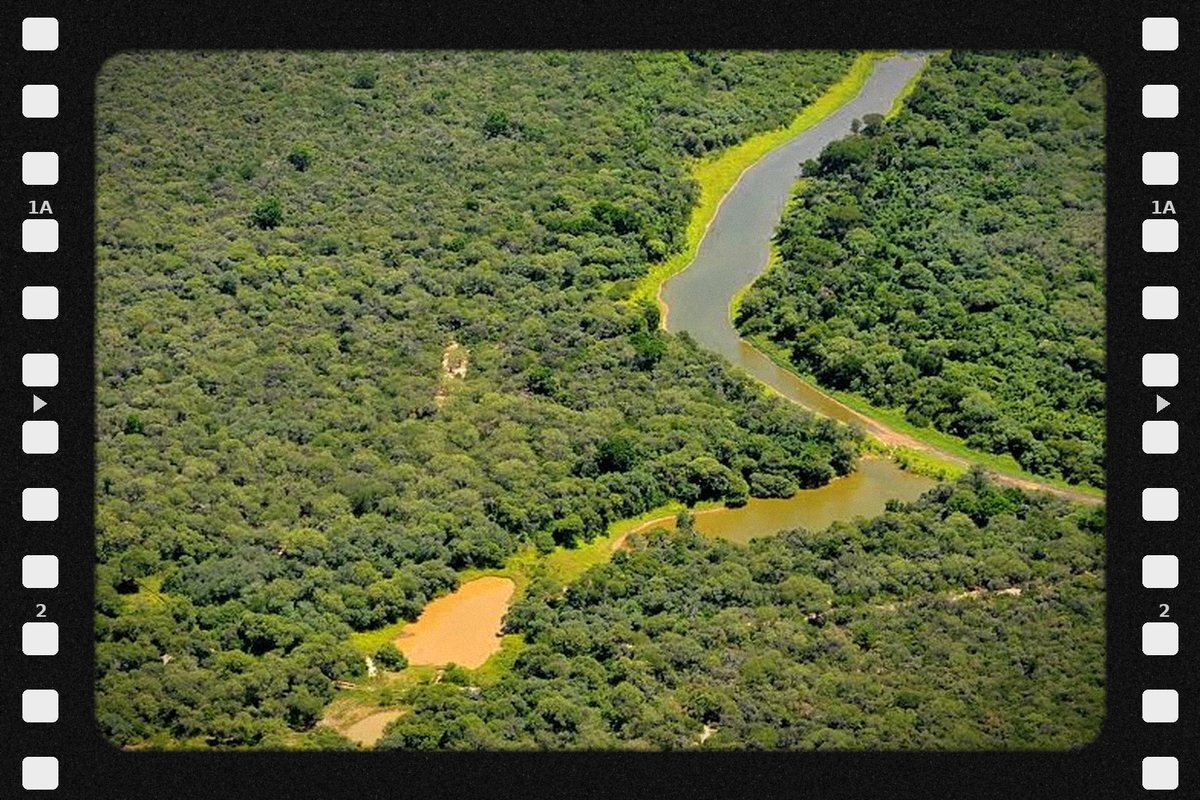
The Chaco has two faces. To the east, the humid Chaco: marshes, lagoons and palm groves, protected by the Chaco and Laguna El Palmar national parks and by the Chaco Wetlands, a Ramsar site of more than half a million hectares. To the west, the dry Chaco: El Impenetrable, one of the country's great native forests, a refuge for the jaguar, the tapir and the giant anteater. And to the southwest, Campo del Cielo, where a shower of iron meteorites fell about 4,000 years ago.
- Parque Nacional Chaco (1954)
- Parque Nacional El Impenetrable (2014)
- Parque Nacional Laguna El Palmar (2023)
Source: Argentine National Parks Administration (SIB-APN).
- Humedales Chaco (2004) · 508,000 ha
Source: Argentine Undersecretariat of Environment, Ramsar Sites Network. Official year of designation and area.
A National Park created by Law 26,996 in 2014 on about 130,000 hectares of the former La Fidelidad estancia, between the Bermejo and Bermejito rivers, in the department of General Güemes. It is the largest national protected area in northern Argentina and safeguards the largest natural remnant of the Chaco forest: habitat of the giant anteater, the tapir, the peccary, the giant armadillo and the jaguar, among hundreds of bird species. Juan José Castelli is its gateway.
Private sector · the Fundación Rewilding Argentina, together with the national and provincial governments, is leading the recovery of the jaguar there, and recorded the birth in the wild of the first Chaco jaguar in decades.
Sources: Law 26,996 · Argentine National Parks Administration · Government of the Argentine Republic · Fundación Rewilding Argentina.
Human wealth
The living figures
The Chaco is a land of Indigenous peoples and immigrants. The Qom, Wichí and Moqoit keep their languages and their art alive in basketry, weaving and pottery, alongside the immigrant colonies that arrived with cotton. Resistencia is the City of Sculptures: hundreds of works inhabit its streets, and the International Sculpture Biennial puts it on the art map every two years. Chamamé sets the pulse of every celebration, and Presidencia Roque Sáenz Peña hosts the National Cotton Festival.
- About 4,000 years ago · a shower of iron meteorites falls in the southwest of the territory; its original inhabitants called the place Piguem Nonraltá, Campo del Cielo, the Field of the Sky. In 2016 the Gancedo meteorite, weighing 30,800 kilos, was extracted there
- Before the conquest · the Qom, Moqoit and Wichí inhabit the Gran Chaco, which remains outside colonial rule for centuries
- 1878 · Resistencia is founded
- 1884 · the National Territories Law creates the Governorate of the Chaco
- 1924 · the Napalpí massacre against the Qom and Moqoit peoples. In 2022, in the first oral trial to investigate crimes against Indigenous communities as crimes against humanity, the federal courts declared it a crime against humanity within the framework of a genocide
- 1951 · the Chaco becomes a province
Sources: Universidad Nacional del Nordeste · Chaco Astronomy Association · Federal Court No. 1 of Resistencia (2022) · Government of the Argentine Republic.
53,798 people identify as Indigenous or as descendants of Indigenous or native peoples: 4.8 % of the province's population. They belong to 42 different peoples, and 31,650 (58.8 %) speak or understand the language of their people. The five largest peoples are:
- Qom/Toba · 32,677
- Wichi · 6,372
- Moqoit/Mocoví · 4,223
- Guaraní · 852
- Diaguita · 173
Source: INDEC, 2022 National Population, Household and Housing Census, final results. Population in private dwellings.
Productive wealth
What it produces and exports
The Chaco is cotton country, the white gold that forged its history, and today it combines it with soybeans, corn, sunflower and a cattle herd of more than two million head. From the native forest comes the red quebracho, the basis of tanning extracts, its main export product. China is today its main buyer.
USD 235 million, 8.7 % more than in 2024: 0.3 % of the national total and 20.7 % of the Northeast.
- Primary products · USD 152 M
- Manufactures of agricultural origin · USD 79 M
- Manufactures of industrial origin · USD 4 M
Main destinations: China (USD 65 M, 27.6 %), European Union (USD 31 M), Brazil (USD 18 M) and Chile (USD 14 M). Main products: tanning and dyeing extracts (USD 65 M), cereals (USD 64 M), oilseeds and oleaginous fruits (USD 48 M) and cotton fiber (USD 18 M).
Source: INDEC, Provincial origin of exports. Goods. Year 2025 (provisional data) and annex tables.
201,960 hectares sown in the 2024/25 season, about a third of the country's cotton area (665,300 hectares).
Source: Argentine Secretariat of Agriculture, Livestock and Fisheries, Agricultural Estimates, 2024/25 season.
2,328,360 head as of 31 December 2024: 4.5 % of the national cattle stock.
Source: SENASA, stock as of 31/12/2024, in Secretariat of Agriculture, Provincial cattle profile 2024.
Tanning extracts, obtained from the red quebracho, lead the Chaco's exports: USD 65 M in 2025.
Source: INDEC, Provincial origin of exports, 2025 annex tables.
CONICET has three research units in the province, among them the Institute of Geohistorical Research (IIGHI), together with the Universidad Nacional del Nordeste.
Source: CONICET, 2025 Management Report.
Space to embed one or more 45s–1min capsules about the province.
To experience it on the ground — restaurants, hotels, events, geolocation — the app.
Open the Argentina al Mundo app