Córdoba
Explora Nuestras Provincias y sus Riquezas is part of Argentina al Mundo, alongside Argentine Delights, Guía AD-Gourmet and Chefs Argentinos al Mundo.
Córdoba, heart of Argentina. Its hills open into valleys of crystal-clear rivers, from Punilla to Calamuchita, and beyond the mountains, Traslasierra and Champaquí. La Docta, the learned city, with the oldest university in the country and a Jesuit heritage that is a World Heritage Site. Land of a singsong accent and humor, of cuarteto that makes everyone dance and fernet to share, of the Cosquín folk festival and an industry that never stops. Córdoba is not visited: it is returned to. Córdoba is joy that spreads.
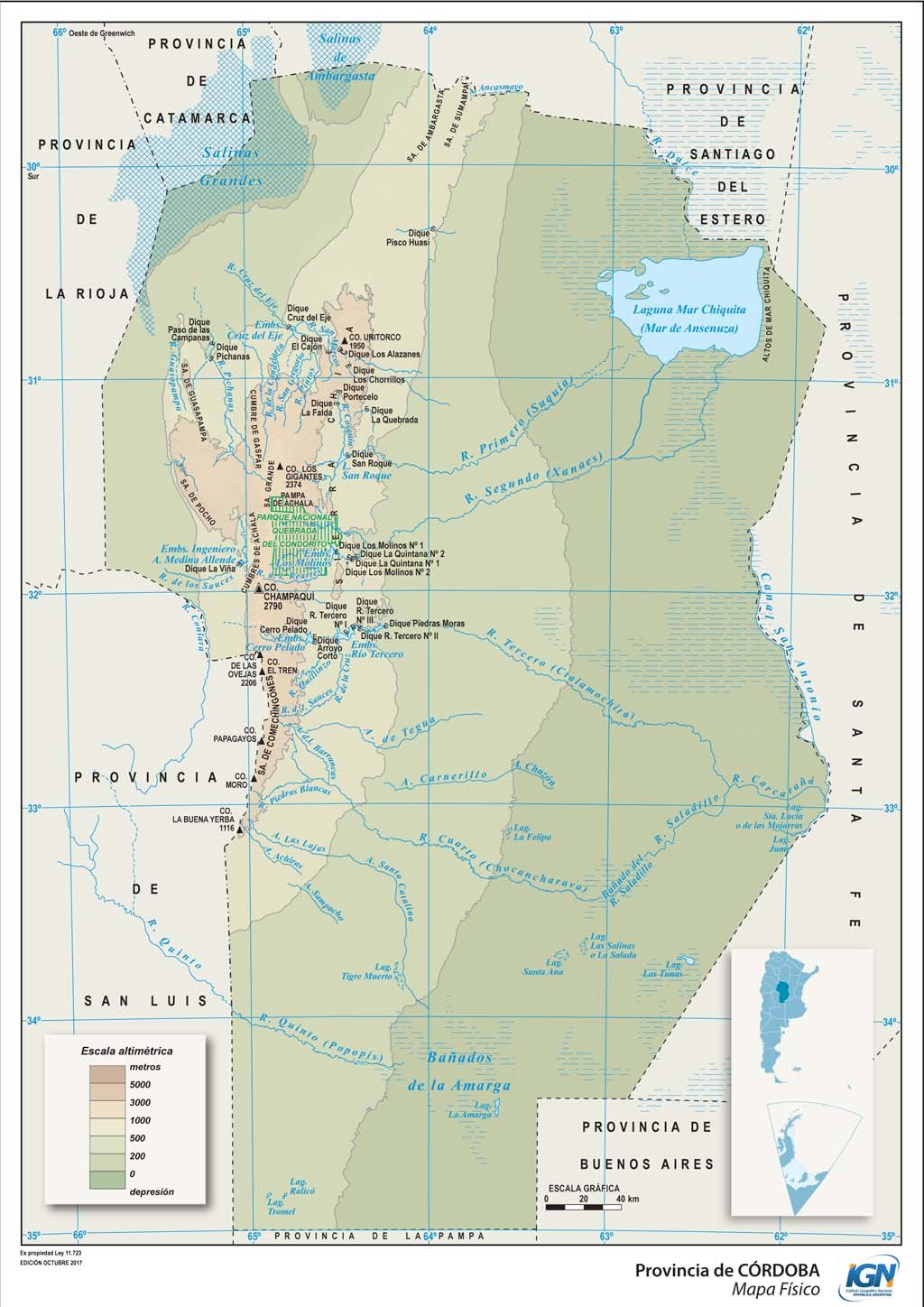
Political map · Source: IGN
- Capital
- Córdoba
- Region
- Pampas
- Area
- 165,321 km²
- Population · 2022 Census
- 3,840,905 inhabitants · 23.2 hab/km²
- Women · Men
- 51.7 % · 48.3 %
- Median age
- 33 years
- By age
- 0 to 14 years: 21.0 % · 15 to 64 years: 66.4 % · 65 years and over: 12.6 %
- Climate
- Temperate; subhumid in the east, semi-arid in the northwest and highland in the Sierras.
- Demonym
- cordobés/esa
- Founding of the capital
- 6 July 1573
- World Heritage (UNESCO)
- Manzana y Estancias Jesuíticas de Córdoba (2000)
- Status
- Province predating the 1853 National Constitution
- Departments
- 26
- Born in another province · abroad
- 13.9 % · 1.7 %
Sources: INDEC, 2022 National Census (final results) · INDEC / IGN (area). World Heritage: UNESCO, World Heritage List · Provincialization laws · IGN (political division).
- Mean annual temperature
- 18.4 °C
- Annual rainfall
- 816 mm
- Mean maximum · warmest month
- 31.2 °C · January
- Mean minimum · coldest month
- 5.5 °C · July
Source: Servicio Meteorológico Nacional (SMN), climatological standard normals 1991–2020, station Córdoba Observatorio, submitted to the World Meteorological Organization.
- Highest point
- Cerro Champaquí · 2,790 m · in the Sierras Grandes
- Main rivers
- Suquía (Primero) · Xanaes (Segundo) · Ctalamochita (Tercero) · Chocancharava (Cuarto) · Popopis (Quinto)
- Ecoregions
- Dry Chaco · Espinal · Pampas
- Main cities
- Córdoba · Río Cuarto · Villa María · San Francisco · Villa Carlos Paz
Sources: Government of the Argentine Republic (argentina.gob.ar) · Secretaría de Infraestructura y Política Hídrica de la Nación, river basins · Ministerio de Ambiente de la Nación, ecoregions of Argentina · INDEC, 2022 National Census (population by department).
- Provincial natural monuments
- Achala toad, Chaco tortoise, turquoise-fronted amazon, Chaco eagle, Andean condor, maned wolf, guanaco and Chacoan peccary · 2025 decree, under Ley 6.964
Sources: Gobierno de la Provincia de Córdoba, Ministerio de Ambiente y Economía Circular · Boletín Oficial de Córdoba.
- Hotel guests · 2024
- 1,357,198 in the surveyed towns: Córdoba 452,281 · Villa Carlos Paz 428,923 · Villa General Belgrano 176,657 · La Falda 106,904 · 4.4 % from abroad
- National parks
- Quebrada del Condorito · Traslasierra · Ansenuza
Sources: INDEC and Secretaría de Turismo de la Nación, Hotel Occupancy Survey (hotels and other lodgings) · Administración de Parques Nacionales.
- Airports · passengers 2025
- Internacional Ingeniero Ambrosio Taravella 3,236,809 · Área de Material 10,460
- Scheduled flights · 2025
- Aeroparque 1,443,588 · Panamá 246,629 · Río de Janeiro 166,321 · Ezeiza 155,592 passengers
- National routes
- RN 7 · RN 8 · RN 9 · RN 19 · RN 20 · RN 35 · RN 36 · RN 38 · RN 60 · RN 148 · RN 158
Sources: Secretaría de Turismo de la Nación, Air connectivity, with ANAC data · Instituto Geográfico Nacional (IGN), national road network and international crossings.
- From Córdoba to the City of Buenos Aires, by road
- 715 km
To the other provincial capitals, by road
- Santa Fe 330 km
- Paraná 361 km
- San Luis 420 km
- Santiago del Estero 430 km
- La Rioja 435 km
- San Fernando del Valle de Catamarca 440 km
- San Juan 500 km
- San Miguel de Tucumán 590 km
- Santa Rosa 600 km
- Mendoza 670 km
- La Plata 757 km
- Resistencia 875 km
- Salta 897 km
- Corrientes 898 km
- San Salvador de Jujuy 930 km
- Formosa 1,043 km
- Neuquén 1,137 km
- Viedma 1,194 km
- Posadas 1,213 km
- Rawson 1,455 km
- Río Gallegos 2,635 km
- Ushuaia 3,228 km
Source: Government of the Argentine Republic (argentina.gob.ar), road distances between provincial capitals.
- National festivals
- Festival Nacional de Folklore · January · Cosquín
Festival Nacional de Doma y Folklore · January · Jesús María
Fiesta Nacional de la Cerveza · October · Villa General Belgrano
Sources: Ley provincial 9.853 · Agencia Córdoba Turismo.
- Share of the national economy · 2024
- 8.6 % · rank 3 of 24
- Growth 2004–2024
- +55 % · the country, +42 %
- Main activities
- Agriculture and livestock 20.0 % · Trade 19.6 % · Food and beverages 6.5 % · Public administration 4.9 %
Source: ECLAC and Ministerio de Economía de la Nación, Provincial breakdown of gross value added, 2004 base (2023 and 2024, preliminary data).
Natural wealth
The territory that defines it
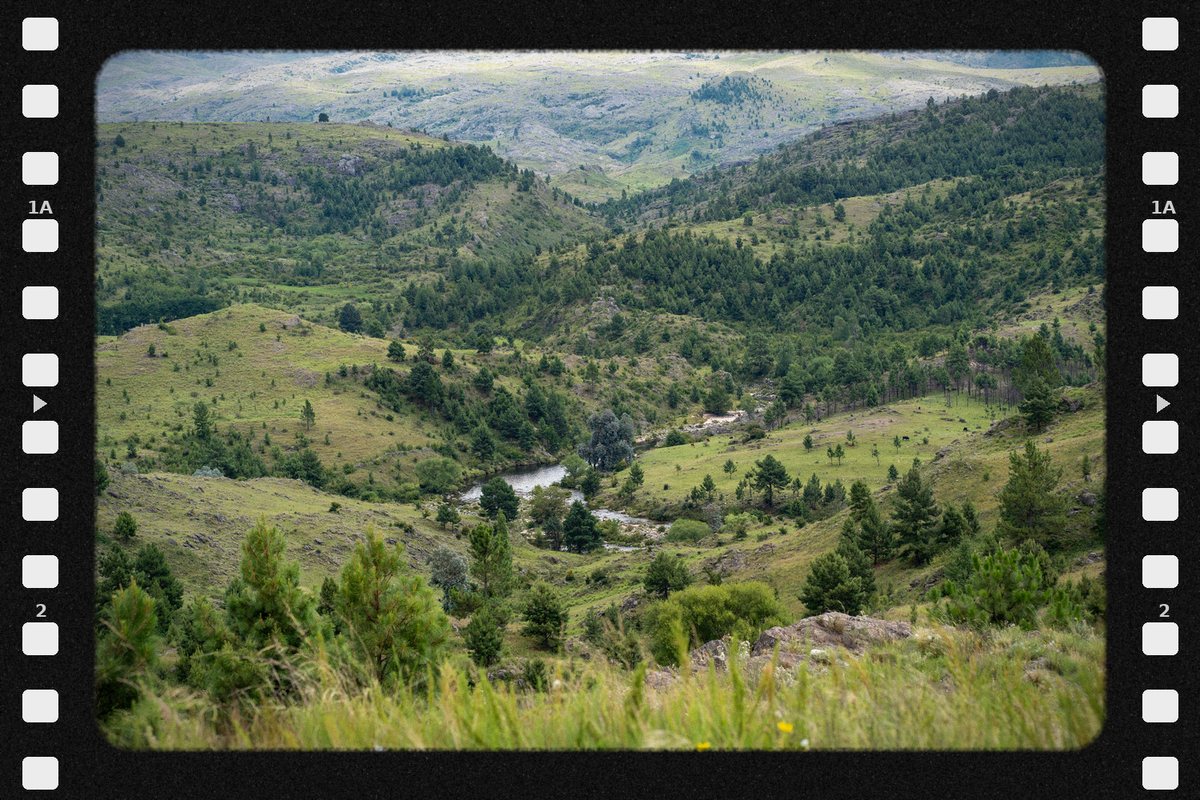
Córdoba is hills and plains. To the west rise the Sierras Grandes and the Sierras Chicas, with the Pampa de Achala and the Quebrada del Condorito, kingdom of the Andean condor, and Champaquí as the roof of the province. Between them open the valleys of Punilla, Calamuchita and Traslasierra, of clear rivers, dams and mountain towns. To the northeast, the Mar de Ansenuza —the Mar Chiquita lagoon—, the largest salt lake in the country and a refuge for flamingos, protected as a National Park since 2022. To the east and south stretches the pampa plain, one of the most fertile in the world.
- Parque Nacional Quebrada del Condorito (1996)
- Parque Nacional Traslasierra (2018)
- Parque Nacional Ansenuza (2022)
Source: Argentine National Parks Administration (SIB-APN).
- Bañados del Río Dulce y Laguna de Mar Chiquita (2002) · 996,000 ha
Source: Argentine Undersecretariat of Environment, Ramsar Sites Network. Official year of designation and area.
Human wealth
The living figures
Córdoba is La Docta, the learned city: a university town since the 17th century, with a singsong accent and a sense of humor that set it apart throughout the country. It is the cradle of cuarteto, which fills dance halls every weekend, and home to great festivals: the Cosquín Folk Festival, the Jesús María Rodeo and Folk Festival and the National Beer Festival in Villa General Belgrano, a legacy of its Central European colonies. At the table, mountain kid goat, Colonia Caroya salami and alfajores, with fernet as a shared ritual.
- Before the conquest · the Comechingón and Sanavirón peoples inhabit the hills and plains; at Cerro Colorado they left thousands of rock paintings
- 1573 · Jerónimo Luis de Cabrera founds Córdoba de la Nueva Andalucía
- 1613 · the Jesuits create the Colegio Máximo, the origin of the Universidad Nacional de Córdoba, the oldest in the country. Its Jesuit Block and Estancias have been a UNESCO World Heritage Site since 2000
- 1918 · the University Reform, born in Córdoba, drives university autonomy and shared governance throughout Latin America
Sources: Universidad Nacional de Córdoba · UNESCO · Agencia Córdoba Turismo.
- Mario Kempes · football · born in Bell Ville, top scorer and champion of the 1978 World Cup
- Paulo Dybala · football · born in Laguna Larga, champion of the 2022 World Cup
- Facundo Campazzo · basketball · born in Córdoba
- La Mona Jiménez · music · icon of Córdoba's cuarteto
- Rodrigo Bueno · music · cuarteto singer born in Córdoba (1973-2000)
Sources: careers published in national and provincial press.
69,218 people identify as Indigenous or as descendants of Indigenous or native peoples: 1.8 % of the province's population. They belong to 52 different peoples, and 7,356 (10.6 %) speak or understand the language of their people. The five largest peoples are:
- Comechingón · 16,982
- Diaguita · 3,251
- Guaraní · 2,991
- Mapuche · 2,751
- Quechua · 2,541
Source: INDEC, 2022 National Population, Household and Housing Census, final results. Population in private dwellings.
Productive wealth
What it produces and exports
Córdoba is the country's third exporting province and an agro-industrial engine: soybeans, corn, wheat and peanuts on the plains, a great dairy basin, cattle and the food industry. To that it adds an automotive and auto-parts hub, the Fábrica Argentina de Aviones and a growing software and knowledge-based services sector. China is today its main buyer.
USD 10,913 million, 6.7 % more than in 2024: 12.5 % of the national total and 17.5 % of the Pampas region.
- Primary products · USD 5,017 M
- Manufactures of agricultural origin · USD 4,280 M
- Manufactures of industrial origin · USD 1,594 M
- Fuels and energy · USD 22 M
Main destinations: China (USD 1,605 M, 14.7 %), Brazil (USD 1,486 M), European Union (USD 1,156 M) and Middle East (USD 914 M). Main products: cereals (USD 2,788 M), oilseeds and oleaginous fruits (USD 2,156 M), food industry residues and waste (USD 1,731 M) and fats and oils (USD 1,500 M).
Source: INDEC, Provincial origin of exports. Goods. Year 2025 (provisional data) and annex tables.
Public sector · Córdoba accounts for almost 73 % of national peanut production (SISA 2023/24). According to INDEC, Argentina is the world's leading exporter of shelled peanuts, with 23 % of global exports.
Private sector · the Córdoba Grain Exchange puts the provincial average at 77 % of national production, and the Argentine Peanut Chamber notes that 90 % of the crop's processing takes place in Córdoba.
Sources: Public sector, Simplified Agricultural Information System (SISA) · INDEC · Private sector, Bolsa de Cereales de Córdoba · Cámara Argentina del Maní.
4,343,706 head as of 31 December 2024: 8.4 % of the national cattle stock.
Source: SENASA, stock as of 31/12/2024, in Secretariat of Agriculture, Provincial cattle profile 2024.
With 41 CONICET research units, Córdoba is the country's third scientific hub, after the City of Buenos Aires and the province of Buenos Aires, together with the Universidad Nacional de Córdoba, the oldest in Argentina.
Source: CONICET, 2025 Management Report.
Space to embed one or more 45s–1min capsules about the province.
To experience it on the ground — restaurants, hotels, events, geolocation — the app.
Open the Argentina al Mundo app