Mendoza
Explora Nuestras Provincias y sus Riquezas is part of Argentina al Mundo, alongside Argentine Delights, Guía AD-Gourmet and Chefs Argentinos al Mundo.
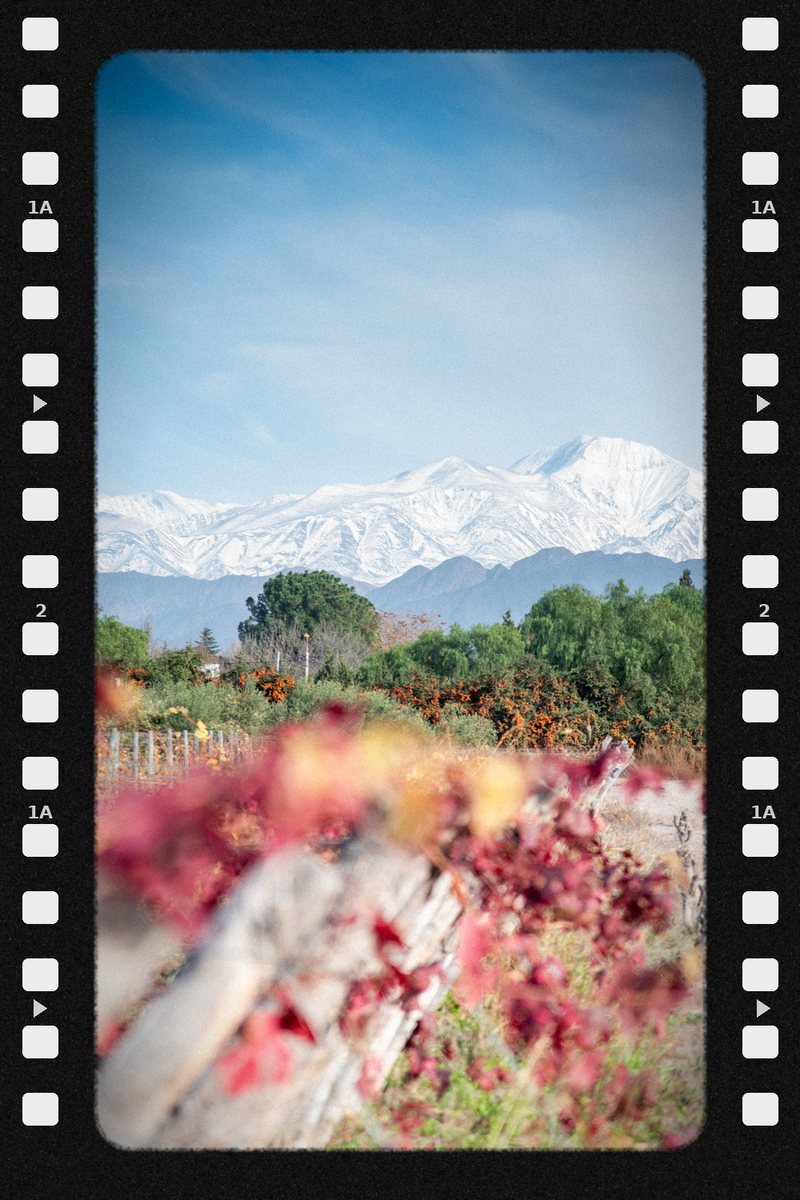
Mendoza, land of sun and good wine. At the foot of Aconcagua, the roof of the Americas, the Andes feed oases of vineyards that stretch from Luján de Cuyo to the Uco Valley. This is where Argentine Malbec was born, and every March the Vendimia celebrates the harvest. Irrigation channels, tree-lined streets and the epic of San Martín, who crossed the Andes from El Plumerillo. Olive, walnut and almond trees. Mendoza is not tasted: it is toasted. Mendoza is the Andes turned into wine.

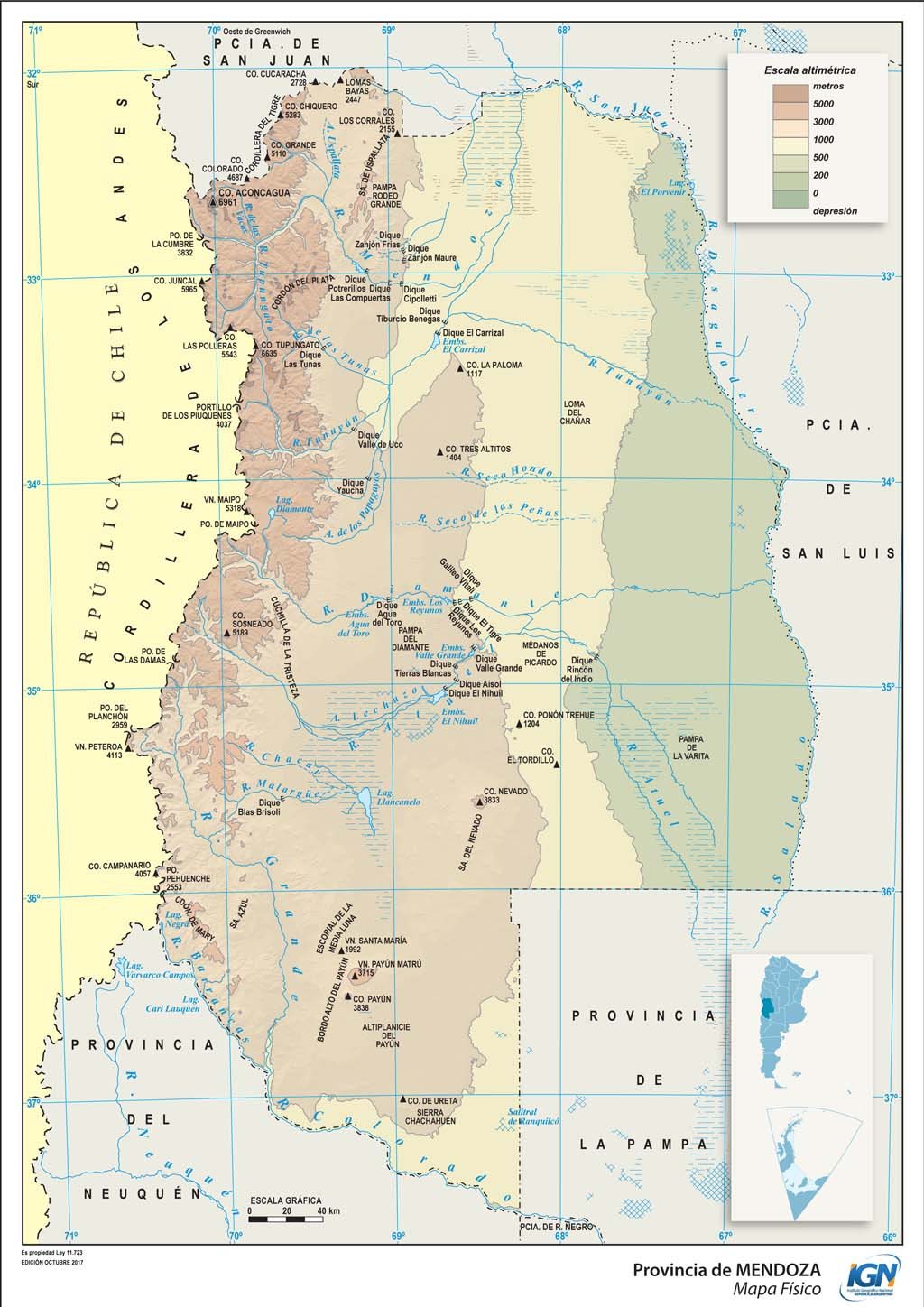
Political map · Source: IGN
- Capital
- Mendoza
- Region
- Cuyo
- Area
- 148,827 km²
- Population · 2022 Census
- 2,043,540 inhabitants · 13.7 hab/km²
- Women · Men
- 51.6 % · 48.4 %
- Median age
- 32 years
- By age
- 0 to 14 years: 23.0 % · 15 to 64 years: 64.6 % · 65 years and over: 12.4 %
- Climate
- Arid and semi-arid, continental temperate; cold high-mountain climate in the Andes.
- Demonym
- mendocino/a
- Founding of the capital
- 2 March 1561
- World Heritage (UNESCO)
- Qhapaq Ñan, Sistema Vial Andino (2014)
- Status
- Province predating the 1853 National Constitution
- Departments
- 18
- Born in another province · abroad
- 12.2 % · 3.3 %
Sources: INDEC, 2022 National Census (final results) · INDEC / IGN (area). World Heritage: UNESCO, World Heritage List · Provincialization laws · IGN (political division).
- Mean annual temperature
- 16.3 °C
- Annual rainfall
- 267 mm
- Mean maximum · warmest month
- 30.7 °C · January
- Mean minimum · coldest month
- 2.9 °C · July
Source: Servicio Meteorológico Nacional (SMN), climatological standard normals 1991–2020, station Mendoza Observatorio, submitted to the World Meteorological Organization.
- Highest point
- Cerro Aconcagua · 6,961 m · the highest in the Americas
- Main rivers
- Mendoza · Tunuyán · Diamante · Atuel · Grande
- Ecoregions
- High Andes · Monte of Sierras and Bolsones · Monte of Plains and Plateaus · Patagonian Steppe
- Main cities
- Mendoza · Guaymallén · Godoy Cruz · Las Heras · San Rafael
Sources: Instituto Geográfico Nacional (IGN), highest elevations · Secretaría de Infraestructura y Política Hídrica de la Nación, river basins · Ministerio de Ambiente de la Nación, ecoregions of Argentina · INDEC, 2022 National Census (population by department).
- Provincial natural monuments
- Andean condor, lesser rhea and guanaco, among other species · Ley 6.599 (1998)
Sources: Legislatura de Mendoza.
- Hotel guests · 2024
- 761,960 in the surveyed towns: Mendoza 527,653 · San Rafael 126,667 · Malargüe y Las Leñas 66,143 · Valle de Uco 41,497 · 28.5 % from abroad
Sources: INDEC and Secretaría de Turismo de la Nación, Hotel Occupancy Survey (hotels and other lodgings) · Administración de Parques Nacionales.
- Airports · passengers 2025
- Internacional El Plumerillo/Gobernador Francisco Gabrielli 2,586,280 · Suboficial Ayudante Santiago Germano 48,762
- Scheduled flights · 2025
- Aeroparque 1,300,158 · Santiago de Chile 375,075 · Ezeiza 268,926 · São Paulo 136,355 passengers
- National routes
- RN 7 · RN 40 · RN 142 · RN 143 · RN 144 · RN 145 · RN 146 · RN 149 · RN 153 · RN 188
- International border crossings
- Chile 7 (Sistema Cristo Redentor)
Sources: Secretaría de Turismo de la Nación, Air connectivity, with ANAC data · Instituto Geográfico Nacional (IGN), national road network and international crossings.
- From Mendoza to the City of Buenos Aires, by road
- 1,050 km
To the other provincial capitals, by road
- San Juan 167 km
- San Luis 260 km
- La Rioja 617 km
- Córdoba 670 km
- Santa Rosa 765 km
- San Fernando del Valle de Catamarca 773 km
- Neuquén 855 km
- Santa Fe 885 km
- Paraná 916 km
- Santiago del Estero 977 km
- San Miguel de Tucumán 1,005 km
- La Plata 1,152 km
- Salta 1,227 km
- San Salvador de Jujuy 1,345 km
- Viedma 1,359 km
- Corrientes 1,565 km
- Resistencia 1,587 km
- Rawson 1,620 km
- Formosa 1,710 km
- Posadas 1,925 km
- Río Gallegos 2,800 km
- Ushuaia 3,393 km
Source: Government of the Argentine Republic (argentina.gob.ar), road distances between provincial capitals.
- National festivals
- Fiesta Nacional de la Vendimia · March
Sources: Res. Secretaría de Turismo de la Nación 137/1972 · Ley provincial 6.973.
- Share of the national economy · 2024
- 3.3 % · rank 6 of 24
- Growth 2004–2024
- +20 % · the country, +42 %
- Main activities
- Trade 15.1 % · Food and beverages 12.3 % · Oil and gas 7.4 % · Agriculture and livestock 6.3 %
Source: ECLAC and Ministerio de Economía de la Nación, Provincial breakdown of gross value added, 2004 base (2023 and 2024, preliminary data).
Natural wealth
The territory that defines it
Mendoza is desert tamed by the water of the Andes. Its oases —the North, the East, the Uco Valley and the South— are born of meltwater rivers and of a network of irrigation channels inherited from the Huarpe. To the west rises Aconcagua, 6,961 meters high, the highest mountain in the Americas and in the world outside Asia, guarded by Aconcagua Provincial Park and the Puente del Inca. To the south, in Malargüe, La Payunia unfolds one of the most impressive volcanic fields on the planet, with hundreds of cones and lava flows, and the Llancanelo Lagoon, a Ramsar site, receives thousands of birds. The Atuel Canyon, in San Rafael, completes the map.
- Laguna de Llancanelo (1995) · 65,000 ha
- Lagunas de Guanacache, Desaguadero y del Bebedero (1999; extended in 2007) · 962,370 ha · shared with San Juan and San Luis
- Reserva Natural Villavicencio (2017) · 62,244 ha
Source: Argentine Undersecretariat of Environment, Ramsar Sites Network. Official year of designation and area.
Human wealth
The living figures
Mendoza lives to the rhythm of the vine. Every March, the National Grape Harvest Festival, held since 1936, gathers the province around the harvest. Its cities of tree-lined streets and irrigation channels, the Huarpe heritage and the great Italian and Spanish immigration shaped a wine culture that today welcomes the world: Mendoza is a member of the Great Wine Capitals network. At the table, Malargüe kid goat, empanadas, olive oil, preserved fruit and high-altitude wines.
- Before the conquest · the Huarpe build the first irrigation channels; the Inca Empire incorporates the territory into the Qhapaq Ñan
- 1561 · Pedro del Castillo founds the city of Mendoza
- 1817 · José de San Martín organizes at the El Plumerillo camp the Army of the Andes, which crosses the mountains to liberate Chile and Peru
- 1853 · at Sarmiento's proposal, the Quinta Normal de Agricultura is created, where the French agronomist Michel Aimé Pouget introduces Malbec; World Malbec Day is celebrated every 17 April
- 1861 · an earthquake destroys the city, which is rebuilt on a new layout around Plaza Independencia
Sources: Government of Mendoza · Instituto Nacional de Vitivinicultura · Wines of Argentina.
- Quino · cartoons · Joaquín Lavado, born in Mendoza (1932-2020), creator of Mafalda
- Los Enanitos Verdes · music · rock band born in Mendoza
Sources: careers published in national and international press.
45,389 people identify as Indigenous or as descendants of Indigenous or native peoples: 2.2 % of the province's population. They belong to 50 different peoples, and 7,352 (16.2 %) speak or understand the language of their people. The five largest peoples are:
- Huarpe · 13,467
- Mapuche · 4,481
- Quechua · 3,148
- Kolla · 1,088
- Diaguita · 723
Source: INDEC, 2022 National Population, Household and Housing Census, final results. Population in private dwellings.
Productive wealth
What it produces and exports
Mendoza is the capital of Argentine wine and has the largest fruit-growing area in the country. It adds olives, nuts, garlic and vegetables, the canning industry, oil from the south and international-scale tourism. Brazil is today its main export destination.
USD 1,539 million, 4.1 % less than in 2024: 1.8 % of the national total and 35.6 % of Cuyo.
- Manufactures of agricultural origin · USD 995 M
- Manufactures of industrial origin · USD 233 M
- Primary products · USD 208 M
- Fuels and energy · USD 103 M
Main destinations: Brazil (USD 410 M, 26.6 %), United States (USD 264 M), European Union (USD 160 M) and Chile (USD 118 M). Main products: beverages, spirits and vinegar (USD 627 M), vegetable, pulse and fruit preparations (USD 271 M), unprocessed vegetables and pulses (USD 133 M) and plastics and their manufactures (USD 127 M).
Source: INDEC, Provincial origin of exports. Goods. Year 2025 (provisional data) and annex tables.
142,785 hectares of vines in 14,593 vineyards: 71.4 % of the country's area. Its beverages accounted for USD 627 M in exports in 2025, the province's leading category.
From Pouget's Malbec to high-altitude wines, the wine map stretches from Luján de Cuyo, home of one of the country's first Controlled Designations of Origin, and Maipú, in the First Zone, to the Uco Valley —Tupungato, Tunuyán and San Carlos—, with vineyards at the foot of the Andes above 1,000 meters, and San Rafael, in the south.
Sources: Instituto Nacional de Vitivinicultura (INV), 2024 annual vineyard area report · INDEC, Provincial origin of exports 2025.
Mendoza accounts for 37 % of the country's fruit-growing area (CNA 2018). It is the leading producer of walnuts, with more than 5,000 hectares of walnut trees, mainly in the Uco Valley, and the leading producer of almonds, with about 2,000 hectares in the North and East oases. It also grows peaches and plums for industry, olives and pistachios in expansion.
Sources: INDEC, 2018 National Agricultural Census · Instituto de Desarrollo Rural de Mendoza (IDR).
INTA La Consulta, in the Uco Valley, has for years supported saffron growing in Mendoza, together with the Azafrán Mendoza producers' group, born in the Cambio Rural program, with fields in the Uco Valley, Uspallata and San Rafael. It is a niche crop, harvested entirely by hand, which found ideal conditions in Cuyo's cold winters.
Sources: INTA La Consulta · Government of Mendoza.
CONICET has ten research units in the province, among them the Argentine Institute of Snow Research, Glaciology and Environmental Sciences (IANIGLA) and IADIZA, dedicated to arid zones, together with the Universidad Nacional de Cuyo and INTA.
Source: CONICET, 2025 Management Report.
Data on mining and hydrocarbons is included for information purposes only, as part of the province's productive profile. Explora Nuestras Provincias y sus Riquezas does not promote extractive activity.
Space to embed one or more 45s–1min capsules about the province.
To experience it on the ground — restaurants, hotels, events, geolocation — the app.
Open the Argentina al Mundo app