Neuquén
Explora Nuestras Provincias y sus Riquezas is part of Argentina al Mundo, alongside Argentine Delights, Guía AD-Gourmet and Chefs Argentinos al Mundo.
Neuquén, the gateway to Andean Patagonia. Lakes of crystal-clear water, forests of pehuén trees and the Lanín volcano watching over the horizon. The Seven Lakes Route links San Martín de los Andes with Villa La Angostura, and in winter snow covers Chapelco. The Limay flows toward the plateau, where the largest dinosaurs in the world once walked. Apples and pears, Pinot Noir in San Patricio del Chañar and the energy of Vaca Muerta. Neuquén is not watched: it is felt. Neuquén is nature and future.

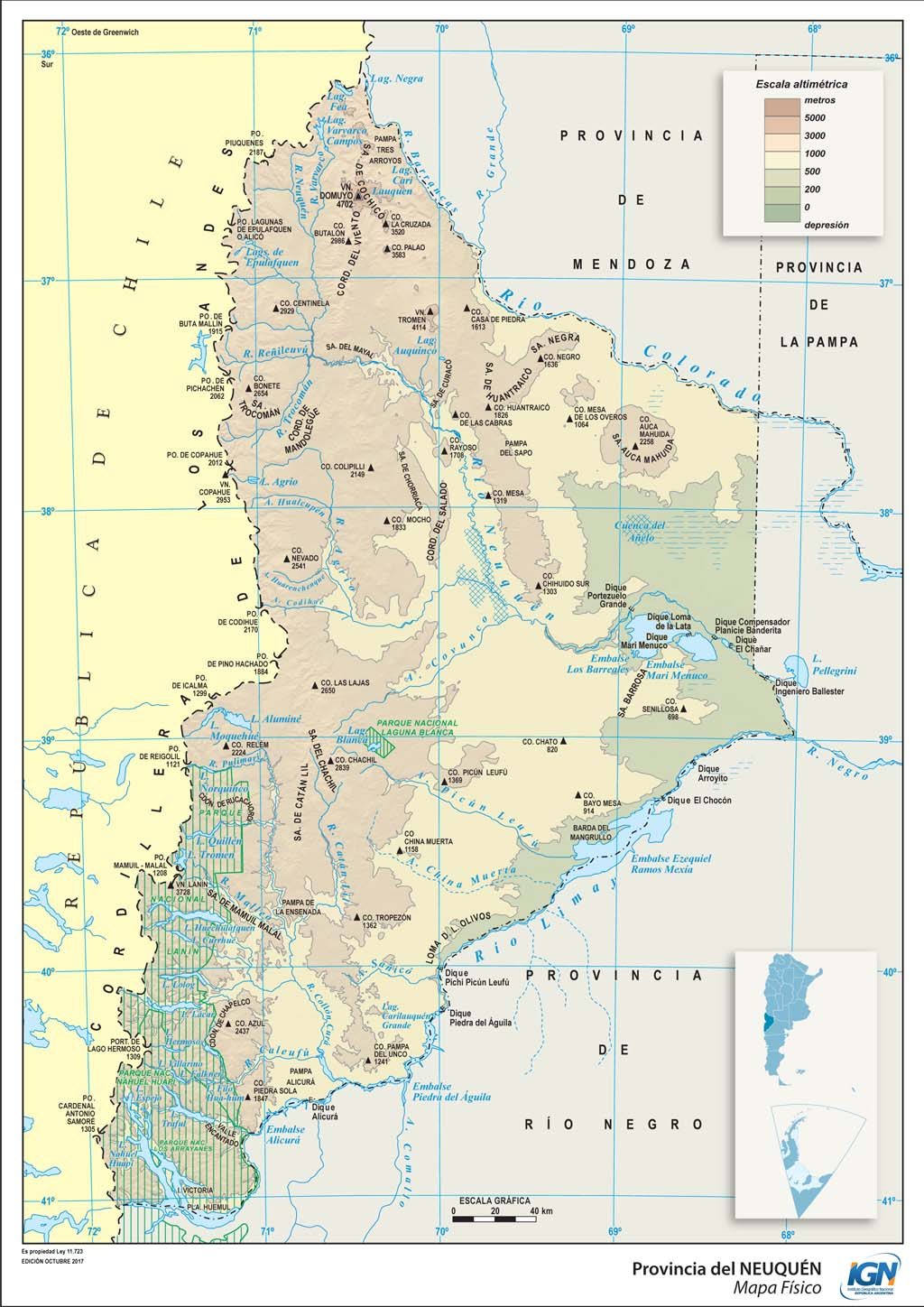
Political map · Source: IGN
- Capital
- Neuquén
- Region
- Patagonia
- Area
- 94,078 km²
- Population · 2022 Census
- 710,814 inhabitants · 7.6 hab/km²
- Women · Men
- 50.9 % · 49.1 %
- Median age
- 32 years
- By age
- 0 to 14 years: 22.5 % · 15 to 64 years: 68.1 % · 65 years and over: 9.4 %
- Climate
- Arid and semi-arid on the plateau; cool temperate and humid in the Andes.
- Demonym
- neuquino/a
- Founding of the capital
- 12 September 1904
- Status
- Province since 1955 · Ley 14.408
- Departments
- 16
- Born in another province · abroad
- 26.5 % · 5.6 %
Sources: INDEC, 2022 National Census (final results) · INDEC / IGN (area) · Provincialization laws · IGN (political division).
- Mean annual temperature
- 14.9 °C
- Annual rainfall
- 212 mm
- Mean maximum · warmest month
- 32.1 °C · January
- Mean minimum · coldest month
- 0.5 °C · July
Source: Servicio Meteorológico Nacional (SMN), climatological standard normals 1991–2020, station Neuquén Aero, submitted to the World Meteorological Organization.
- Highest point
- Volcán Domuyo · 4,709 m · in the Cordillera del Viento
- Main rivers
- Neuquén · Limay · Colorado · Aluminé · Agrio
- Ecoregions
- High Andes · Patagonian Forests · Patagonian Steppe · Monte of Plains and Plateaus
- Main cities
- Neuquén · Cutral Có · Plottier · Centenario · Zapala
Sources: Government of the Argentine Republic (argentina.gob.ar) · Secretaría de Infraestructura y Política Hídrica de la Nación, river basins · Ministerio de Ambiente de la Nación, ecoregions of Argentina · INDEC, 2022 National Census (population by department).
- Provincial flower
- Mutisia · Ley 2.465 (2004) · celebrated on 24 August
- Provincial natural monument
- Huemul · Ley 2.696 (2010)
Sources: Legislatura del Neuquén · Gobierno de la Provincia del Neuquén.
- Hotel guests · 2024
- 511,715 in the surveyed towns: Neuquén 246,835 · San Martín de los Andes 192,800 · Villa La Angostura 72,080 · 17.2 % from abroad
- National parks
- Lanín · Nahuel Huapi · Los Arrayanes · Laguna Blanca
Sources: INDEC and Secretaría de Turismo de la Nación, Hotel Occupancy Survey (hotels and other lodgings) · Administración de Parques Nacionales.
- Airports · passengers 2025
- Internacional Presidente Perón 1,368,959 · Aviador C. Campos 338,117
- Scheduled flights · 2025
- Aeroparque 897,445 · Córdoba 144,448 · Ezeiza 141,301 · Salta 84,152 passengers
- National routes
- RN 22 · RN 40 · RN 231 · RN 234 · RN 237 · RN 242
- International border crossings
- Chile 12
Sources: Secretaría de Turismo de la Nación, Air connectivity, with ANAC data · Instituto Geográfico Nacional (IGN), national road network and international crossings.
- From Neuquén to the City of Buenos Aires, by road
- 1,158 km
To the other provincial capitals, by road
- Santa Rosa 537 km
- Viedma 660 km
- Rawson 750 km
- Mendoza 855 km
- San Luis 883 km
- San Juan 1,022 km
- Córdoba 1,137 km
- La Plata 1,197 km
- Santa Fe 1,347 km
- Paraná 1,378 km
- La Rioja 1,472 km
- Santiago del Estero 1,567 km
- San Fernando del Valle de Catamarca 1,588 km
- San Miguel de Tucumán 1,860 km
- Río Gallegos 1,930 km
- Corrientes 1,989 km
- Resistencia 2,012 km
- Formosa 2,060 km
- Salta 2,082 km
- Posadas 2,198 km
- San Salvador de Jujuy 2,200 km
- Ushuaia 2,523 km
Source: Government of the Argentine Republic (argentina.gob.ar), road distances between provincial capitals.
- National festivals
- Fiesta Nacional de la Confluencia · February · Neuquén
Fiesta Nacional del Pehuén · February · Aluminé
Sources: Ley nacional 27.391 · Res. Ministerio de Turismo y Deportes de la Nación (2022) · Ley provincial 3.048.
- Share of the national economy · 2024
- 4.4 % · rank 5 of 24
- Growth 2004–2024
- +92 % · the country, +42 %
- Main activities
- Oil and gas 56.5 % · Trade 5.5 % · Public administration 5.1 % · Public education 5.1 %
Source: ECLAC and Ministerio de Economía de la Nación, Provincial breakdown of gross value added, 2004 base (2023 and 2024, preliminary data).
Natural wealth
The territory that defines it
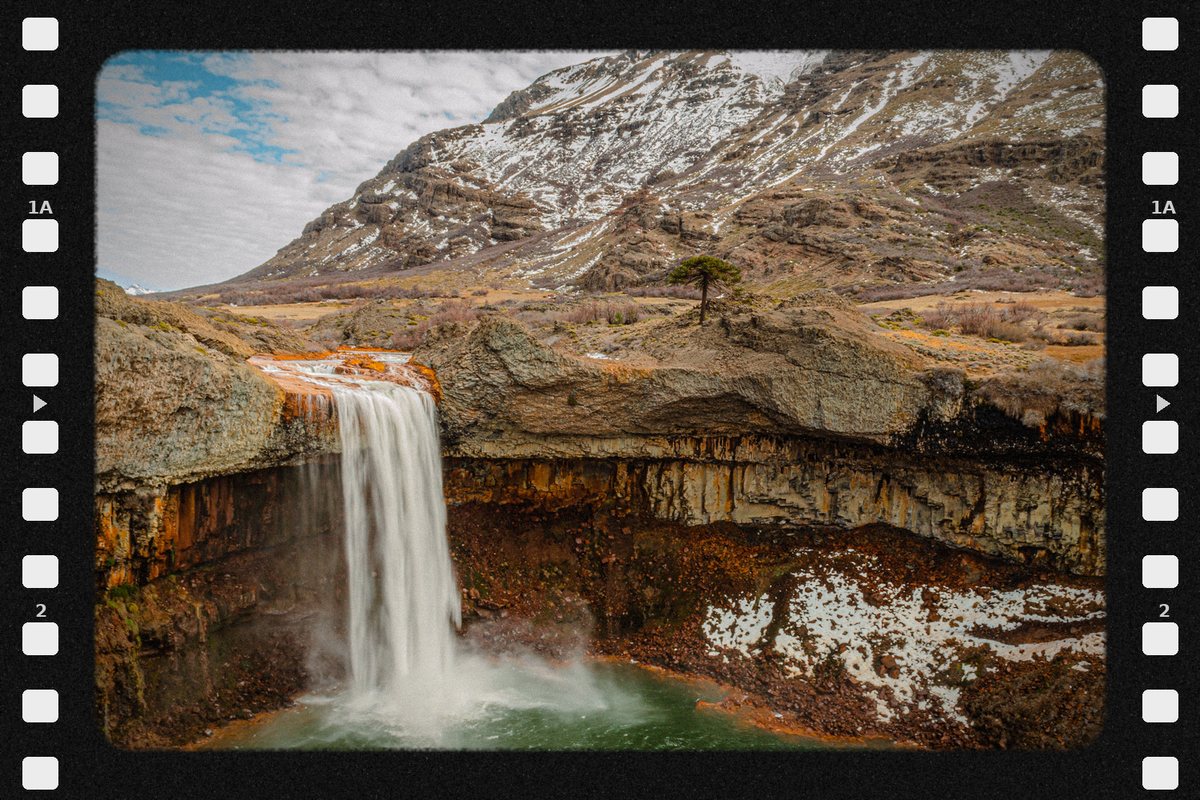
Neuquén is the gateway to Andean Patagonia. To the west, the Andes are covered with forests of pehuén —the sacred araucaria of the Mapuche people—, coihue and lenga, glacial lakes and volcanoes such as Lanín, the symbol of the province. To the north, Domuyo, the roof of Patagonia, and the hot springs of Copahue and Caviahue. To the east, the plateau and the valleys of the Limay and Neuquén rivers, which join at the capital to form the Río Negro. And beneath the steppe, one of the richest dinosaur fossil beds on the planet.
- Parque Nacional Nahuel Huapi (1934)
- Parque Nacional Lanín (1937)
- Parque Nacional Laguna Blanca (1940)
- Parque Nacional Los Arrayanes (1971)
Source: Argentine National Parks Administration (SIB-APN).
- Parque Nacional Laguna Blanca (1992) · 11,250 ha
- Parque Provincial El Tromen (2006) · 30,000 ha
Source: Argentine Undersecretariat of Environment, Ramsar Sites Network. Official year of designation and area.
- Seven Lakes Route · the stretch of Route 40 between San Martín de los Andes and Villa La Angostura, among lakes, forests and mountains
- Villa La Angostura · on Nahuel Huapi, gateway to Los Arrayanes National Park, which protects one of the few pure myrtle forests in the world
- San Martín de los Andes · on the shores of Lake Lácar, gateway to Lanín National Park and Cerro Chapelco, one of Patagonia's ski resorts
- Lanín Volcano · 3,776 meters, summit of the National Park that bears its name
- Limay River · born in Lake Nahuel Huapi, it flows down toward the plateau, famous for fly fishing and its dams
- Caviahue and Copahue · hot springs and volcanoes in northern Neuquén, a ski center and wellness destination
Sources: Argentine National Parks Administration · Government of the Province of Neuquén.
Some of the largest dinosaurs in the world were found in Neuquén: Argentinosaurus, one of the largest known herbivores, on display at the Carmen Funes Municipal Museum in Plaza Huincul, and Giganotosaurus, one of the largest carnivores, at the Ernesto Bachmann Museum in Villa El Chocón.
Sources: Carmen Funes Municipal Museum · Ernesto Bachmann Paleontological Museum · CONICET.
Human wealth
The living figures
Neuquén is a young province on the move, welcoming workers from all over the country drawn by energy. Mapuche culture, which sustains its communities and language, coexists with the tradition of the transhumant herders of the north, who every summer take their goats up to the summer pastures, and with the life of the mountain towns. At the table, creole kid goat, trout from its lakes, pehuén pine nuts, berries and Patagonian wines.
- Before the conquest · the Mapuche and Pehuenche —the people of the pehuén— inhabit the valleys and mountain forests
- 1879-1885 · military campaigns incorporate the territory into the national State
- 1884 · the National Territory of Neuquén is created; from 1887 its capital is Chos Malal
- 1904 · the capital moves to the confluence of the Limay and Neuquén rivers, where the city of Neuquén is born
- 1955 · Neuquén becomes a province
Sources: Government of the Province of Neuquén.
54,436 people identify as Indigenous or as descendants of Indigenous or native peoples: 7.7 % of the province's population. They belong to 42 different peoples, and 15,036 (27.6 %) speak or understand the language of their people. The five largest peoples are:
- Mapuche · 39,976
- Mapuche Tehuelche · 2,657
- Tehuelche · 923
- Guaraní · 741
- Quechua · 698
Source: INDEC, 2022 National Population, Household and Housing Census, final results. Population in private dwellings.
Productive wealth
What it produces and exports
Neuquén is today Argentina's energy engine: Vaca Muerta made it the country's leading oil and gas producer. To that it adds hydroelectric generation in the Comahue, fruit growing in the Alto Valle, Patagonian wines and international-scale mountain tourism. The United States and Chile are today its main export destinations.
USD 4,534 million, 18.8 % more than in 2024: 5.2 % of the national total and 35.9 % of Patagonia.
- Fuels and energy · USD 4,382 M
- Manufactures of industrial origin · USD 68 M
- Primary products · USD 61 M
- Manufactures of agricultural origin · USD 23 M
Main destinations: United States (USD 1,989 M, 43.9 %), Chile (USD 1,663 M), Brazil (USD 191 M) and Uruguay (USD 186 M). Main products: crude oil (USD 3,808 M), petroleum gas and other gaseous hydrocarbons (USD 564 M), chemicals and related products (amount withheld for statistical confidentiality) and fresh fruit (USD 35 M).
Source: INDEC, Provincial origin of exports. Goods. Year 2025 (provisional data) and annex tables.
In July 2026 the province reached a historic record of 658,639 barrels of oil per day, 97 % of it unconventional. In April 2026 it contributed 70.5 % of the oil produced in Argentina. In 2025, crude oil was its main export, with USD 3,808 M.
Sources: Ministry of Energy and Natural Resources of Neuquén · Argentine Secretariat of Energy · INDEC, Provincial origin of exports 2025.
1,499 hectares of vines in 87 vineyards, with the largest average size in the country: 17.2 hectares per vineyard. The San Patricio del Chañar wine hub, born on the plateau in the 2000s, stands out for its cool-climate wines, with Pinot Noir among its emblematic grapes.
Source: Instituto Nacional de Vitivinicultura (INV), 2024 annual vineyard area report.
The Limay and Neuquén valleys form, together with Río Negro, the Alto Valle, the country's main apple and pear growing area. Fresh fruit accounted for USD 35 M in exports in 2025.
Sources: Argentine Secretariat of Agriculture · INDEC, Provincial origin of exports 2025.
Raised by more than 1,500 herding families in the seasonal migration between winter and summer pastures, the kid goat of northern Neuquén obtained in 2010 the first Designation of Origin for an Argentine food (Resolution 950/2010), and is today the only meat in the country with that seal. Chos Malal celebrates the National Kid Goat Festival every year.
Sources: Argentine Secretariat of Agriculture, Designations of Origin · Government of the Province of Neuquén.
On the Limay and Neuquén rivers stand the great dams of the Comahue —El Chocón, Alicurá, Piedra del Águila and Pichi Picún Leufú, among others—, one of the country's main hydroelectric systems.
Source: Interjurisdictional Authority of the Limay, Neuquén and Negro River Basins (AIC).
CONICET has four research units in the province, together with the Universidad Nacional del Comahue.
Source: CONICET, 2025 Management Report.
Data on mining and hydrocarbons is included for information purposes only, as part of the province's productive profile. Explora Nuestras Provincias y sus Riquezas does not promote extractive activity.
Space to embed one or more 45s–1min capsules about the province.
To experience it on the ground — restaurants, hotels, events, geolocation — the app.
Open the Argentina al Mundo app