Santa Fe
Explora Nuestras Provincias y sus Riquezas is part of Argentina al Mundo, alongside Argentine Delights, Guía AD-Gourmet and Chefs Argentinos al Mundo.
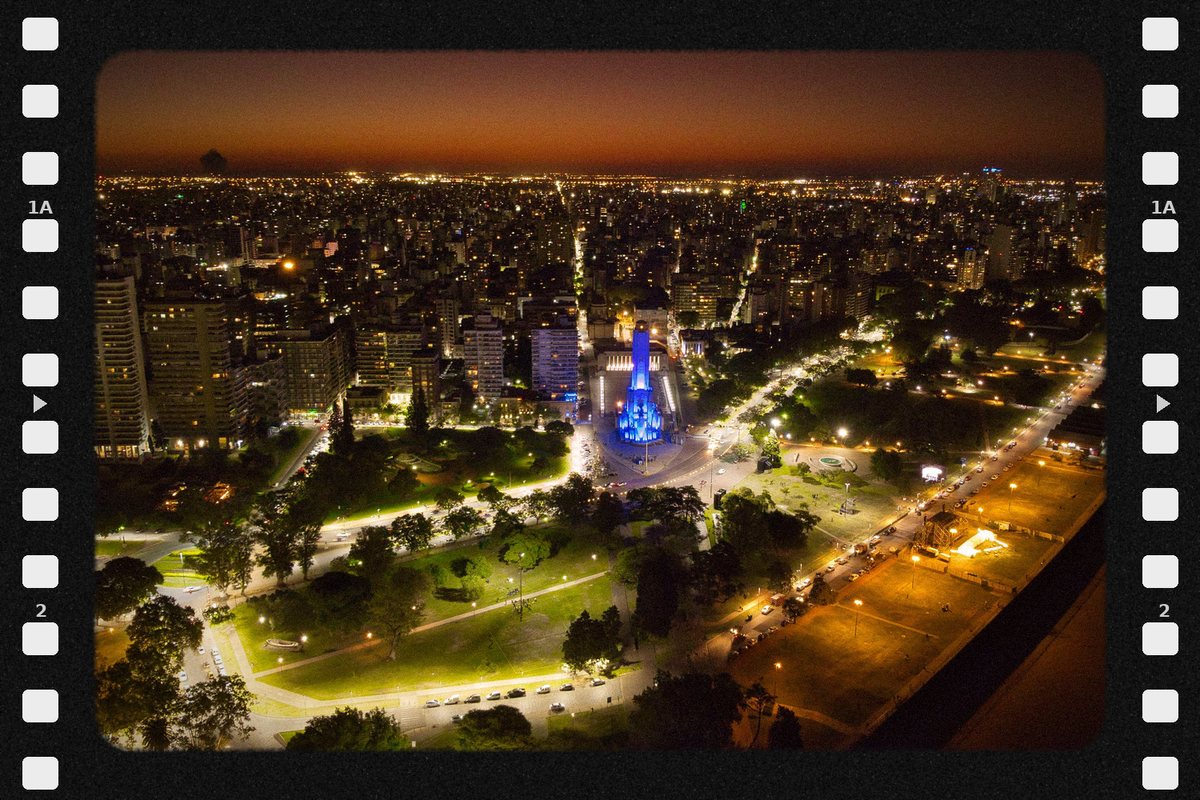
Santa Fe, where the Flag was born. On the banks of the Paraná, Belgrano raised it for the first time, and in its capital the National Constitution was enacted. Land of islands and wetlands, of the Setúbal lagoon and the Suspension Bridge, of colonies that made the pampa fertile. Lionel Messi, the best player in the world, was born in Rosario, and from its ports flows the food that reaches the whole planet. River fish, alfajores and an ice-cold liso of draft beer. Santa Fe is not watched: it is celebrated. Santa Fe, the homeland turned into passion.

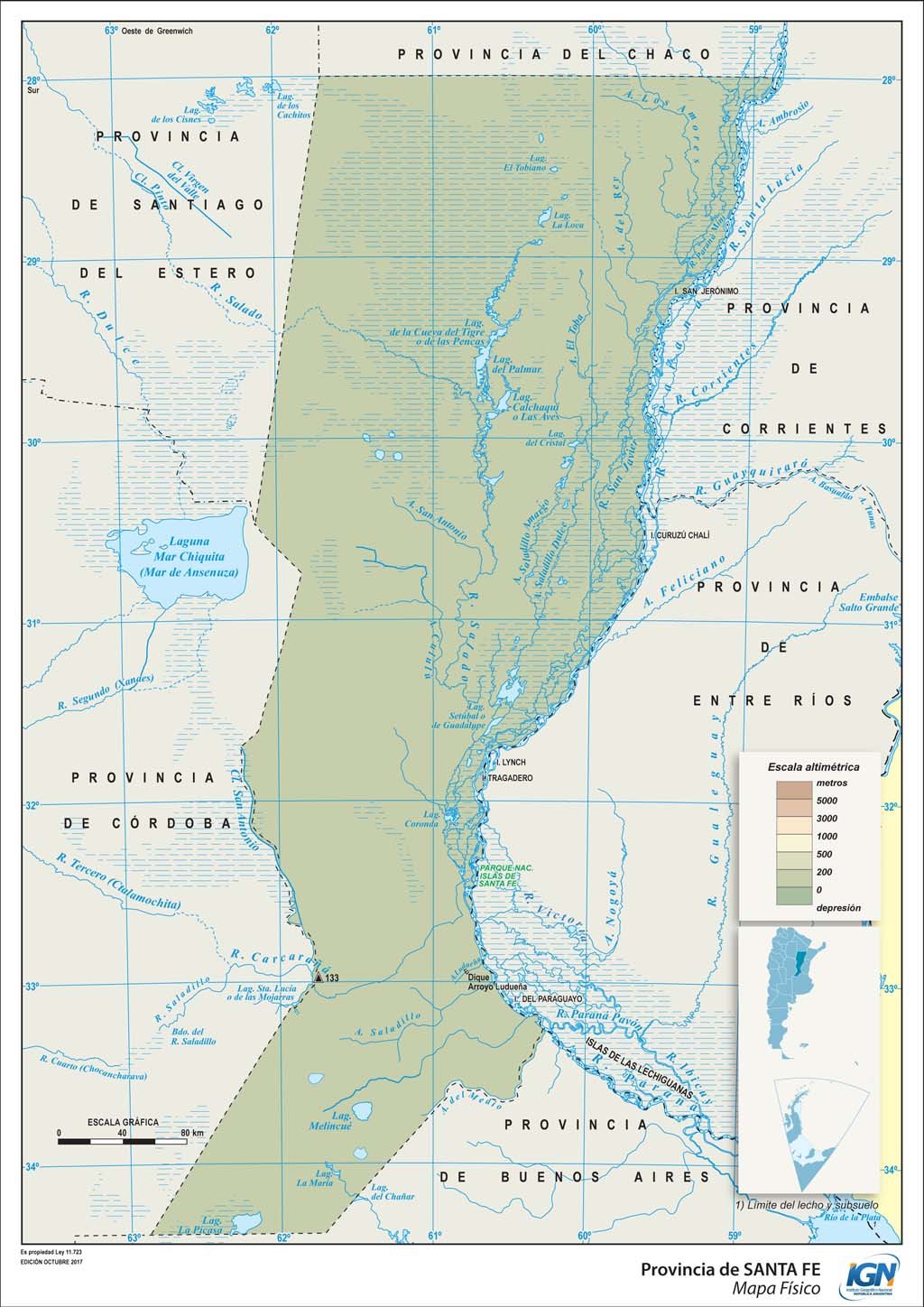
Political map · Source: IGN
- Capital
- Santa Fe
- Region
- Pampas
- Area
- 133,007 km²
- Population · 2022 Census
- 3,544,908 inhabitants · 26.7 hab/km²
- Women · Men
- 51.8 % · 48.2 %
- Median age
- 34 years
- By age
- 0 to 14 years: 21.1 % · 15 to 64 years: 65.9 % · 65 years and over: 13.0 %
- Climate
- Humid temperate in the south; humid subtropical in the north.
- Demonym
- santafesino/a
- Founding of the capital
- 15 November 1573 (in Cayastá; moved to its current site in the 17th century)
- Status
- Province predating the 1853 National Constitution
- Departments
- 19
- Born in another province · abroad
- 12.7 % · 1.4 %
Sources: INDEC, 2022 National Census (final results) · INDEC / IGN (area) · Provincialization laws · IGN (political division).
- Mean annual temperature
- 18.9 °C
- Annual rainfall
- 1,076 mm
- Mean maximum · warmest month
- 31.5 °C · January
- Mean minimum · coldest month
- 6.7 °C · July
Source: Servicio Meteorológico Nacional (SMN), climatological standard normals 1991–2020, station Sauce Viejo Aero, submitted to the World Meteorological Organization.
- Main rivers
- Paraná · Salado · Carcarañá
- Ecoregions
- Humid Chaco · Dry Chaco · Espinal · Pampas · Paraná Delta and Islands
- Main cities
- Rosario · Santa Fe · Rafaela · Venado Tuerto · Reconquista
Sources: Secretaría de Infraestructura y Política Hídrica de la Nación, river basins · Ministerio de Ambiente de la Nación, ecoregions of Argentina · INDEC, 2022 National Census (population by department).
- Provincial natural monuments
- Pampas deer and maned wolf · Ley 12.182 (2003)
Chaco eagle and yellow cardinal · Ley 14.134 (2022)
Sources: Gobierno de la Provincia de Santa Fe, Ministerio de Ambiente y Cambio Climático.
- Hotel guests · 2024
- 557,488 in the surveyed towns: Rosario 370,587 · Santa Fe 144,384 · Rafaela 42,517 · 9.1 % from abroad
- National park
- Islas de Santa Fe
Sources: INDEC and Secretaría de Turismo de la Nación, Hotel Occupancy Survey (hotels and other lodgings) · Administración de Parques Nacionales.
- Airports · passengers 2025
- Internacional de Rosario Islas Malvinas 393,586 · de Sauce Viejo 98,319
- Scheduled flights · 2025
- Aeroparque 115,414 · Panamá 99,965 · Río de Janeiro 63,045 · Lima 27,706 passengers
- National routes
- RN 7 · RN 8 · RN 9 · RN 11 · RN 19 · RN 33 · RN 34 · RN 95 · RN 98 · RN 168 · RN 173 · RN 174 · RN 178
Sources: Secretaría de Turismo de la Nación, Air connectivity, with ANAC data · Instituto Geográfico Nacional (IGN), national road network and international crossings.
- From Santa Fe to the City of Buenos Aires, by road
- 478 km
To the other provincial capitals, by road
- Paraná 31 km
- Córdoba 330 km
- La Plata 527 km
- Resistencia 545 km
- Corrientes 568 km
- Santiago del Estero 607 km
- San Luis 625 km
- Formosa 713 km
- La Rioja 765 km
- San Miguel de Tucumán 767 km
- San Fernando del Valle de Catamarca 770 km
- Santa Rosa 810 km
- San Juan 830 km
- Posadas 883 km
- Mendoza 885 km
- Salta 1,074 km
- San Salvador de Jujuy 1,107 km
- Neuquén 1,347 km
- Viedma 1,404 km
- Rawson 1,665 km
- Río Gallegos 2,845 km
- Ushuaia 3,438 km
Source: Government of the Argentine Republic (argentina.gob.ar), road distances between provincial capitals.
- National festivals
- Fiesta Nacional del Oro Dulce · Casilda
- Traditional festivals
- Día de la Bandera · 20 June · Rosario
Sources: Res. Secretaría de Turismo de la Nación 380/1999 · Ley nacional 27.399.
- Share of the national economy · 2024
- 8.2 % · rank 4 of 24
- Growth 2004–2024
- +37 % · the country, +42 %
- Main activities
- Agriculture and livestock 17.2 % · Trade 15.9 % · Food and beverages 8.8 % · Public administration 5.2 %
Source: ECLAC and Ministerio de Economía de la Nación, Provincial breakdown of gross value added, 2004 base (2023 and 2024, preliminary data).
Natural wealth
The territory that defines it
Santa Fe is the Paraná River. Along its eastern shore follow one another islands, streams and wetlands protected by Islas de Santa Fe National Park and by three Ramsar sites: Jaaukanigás, in the north; the Melincué lagoon, in the south; and the Paraná Delta. To the north stretch the Cuña Boscosa, with its quebracho forests, and the Bajos Submeridionales, an immense floodplain. The center and south are the humid pampa, among the most fertile farmland on the planet. In the capital, the Setúbal lagoon and the Suspension Bridge are its postcard.
- Parque Nacional Islas de Santa Fe (2010)
Source: Argentine National Parks Administration (SIB-APN).
- Jaaukanigás (2001) · 492,000 ha
- Humedal Laguna Melincué (2008) · 92,000 ha
- Delta del Paraná (2015) · 243,126 ha · shared with Entre Ríos
Source: Argentine Undersecretariat of Environment, Ramsar Sites Network. Official year of designation and area.
Human wealth
The living figures
Santa Fe is the cradle of the Flag and of the Constitution. Its identity is born of the river and of immigration: Italians, Swiss, Germans and Piedmontese founded the colonies that transformed the pampa. It is a land of football, of clubs and of world idols. At the table, river fish —surubí, boga, dorado—, the Santa Fe alfajor, Rosario's carlito sandwich and the liso, the glass of draft beer that is a ritual in the capital.
- Before the conquest · the Timbú and Chaná fish among the islands of the Paraná; the Mocoví and Abipón roam the Santa Fe Chaco
- 1573 · Juan de Garay founds Santa Fe in Cayastá; its ruins, Santa Fe la Vieja, are preserved as a historic site. The city moves to its current site in the 17th century
- 1812 · Manuel Belgrano raises the Argentine Flag for the first time on the banks of the Paraná, in Rosario
- 1853 · the Congress gathered in Santa Fe enacts the National Constitution
- 1856 · Esperanza is founded, the country's first organized agricultural colony, the gateway to the great European immigration
Sources: Government of the Province of Santa Fe · National Flag Memorial.
- Lionel Messi · football · born in Rosario, world champion in 2022
- Ángel Di María · football · born in Rosario, world champion in 2022
- Lionel Scaloni · football · born in Pujato, world champion coach in 2022
- Luciana Aymar · hockey · born in Rosario, eight times voted the world's best player
- Fito Páez · music · born in Rosario
Sources: careers published in national and international press.
57,193 people identify as Indigenous or as descendants of Indigenous or native peoples: 1.6 % of the province's population. They belong to 50 different peoples, and 9,064 (15.8 %) speak or understand the language of their people. The five largest peoples are:
- Moqoit/Mocoví · 11,278
- Qom/Toba · 7,773
- Guaraní · 3,934
- Mapuche · 1,478
- Diaguita · 1,246
Source: INDEC, 2022 National Population, Household and Housing Census, final results. Population in private dwellings.
Productive wealth
What it produces and exports
Santa Fe is the country's second exporting province and the heart of Argentina's oilseed complex: soybeans, corn and wheat are turned into meal and oil at the plants of Greater Rosario and go out to the world along the Paraná. It adds a great dairy basin, the country's second cattle herd, the farm machinery industry and a biotechnology hub of international reach. India is today its main export destination.
USD 16,190 million, 5.2 % more than in 2024: 18.6 % of the national total and 26.0 % of the Pampas region.
- Manufactures of agricultural origin · USD 11,919 M
- Primary products · USD 2,634 M
- Manufactures of industrial origin · USD 1,500 M
- Fuels and energy · USD 137 M
Main destinations: India (USD 2,411 M, 14.9 %), European Union (USD 1,941 M), China (USD 1,737 M) and Brazil (USD 1,337 M). Main products: food industry residues and waste (USD 5,072 M), fats and oils (USD 4,679 M), cereals (USD 1,390 M) and oilseeds and oleaginous fruits (USD 1,156 M).
Source: INDEC, Provincial origin of exports. Goods. Year 2025 (provisional data) and annex tables.
Public sector · in 2025, food industry residues —meal and pellets— reached USD 5,072 M and fats and oils USD 4,679 M: the province's two leading exports.
Private sector · according to the Rosario Board of Trade, in 2025 Greater Rosario was the world's leading agro-export port hub, with 75.7 million tonnes of grain, meal and oil, ahead of New Orleans and Santos. Its 30 terminals along 70 kilometers of the Paraná, from Timbúes to Arroyo Seco, concentrate 75 % of the country's oilseed crushing capacity.
Sources: Public sector, INDEC, Provincial origin of exports 2025 · Private sector, Bolsa de Comercio de Rosario.
6,024,319 head as of 31 December 2024: 11.7 % of the national cattle stock, the country's second cattle province.
Source: SENASA, stock as of 31/12/2024, in Secretariat of Agriculture, Provincial cattle profile 2024.
With 29 CONICET research units, together with the Universidad Nacional del Litoral and the Universidad Nacional de Rosario, Santa Fe is the country's fourth scientific hub. The HB4 technology was developed at the Institute of Agrobiotechnology of the Litoral (CONICET-UNL): the basis of the world's first approved drought-tolerant wheat, brought to market by the Rosario company Bioceres.
Sources: CONICET, 2025 Management Report · Universidad Nacional del Litoral.
Space to embed one or more 45s–1min capsules about the province.
To experience it on the ground — restaurants, hotels, events, geolocation — the app.
Open the Argentina al Mundo app