Santiago del Estero
Explora Nuestras Provincias y sus Riquezas is part of Argentina al Mundo, alongside Argentine Delights, Guía AD-Gourmet and Chefs Argentinos al Mundo.
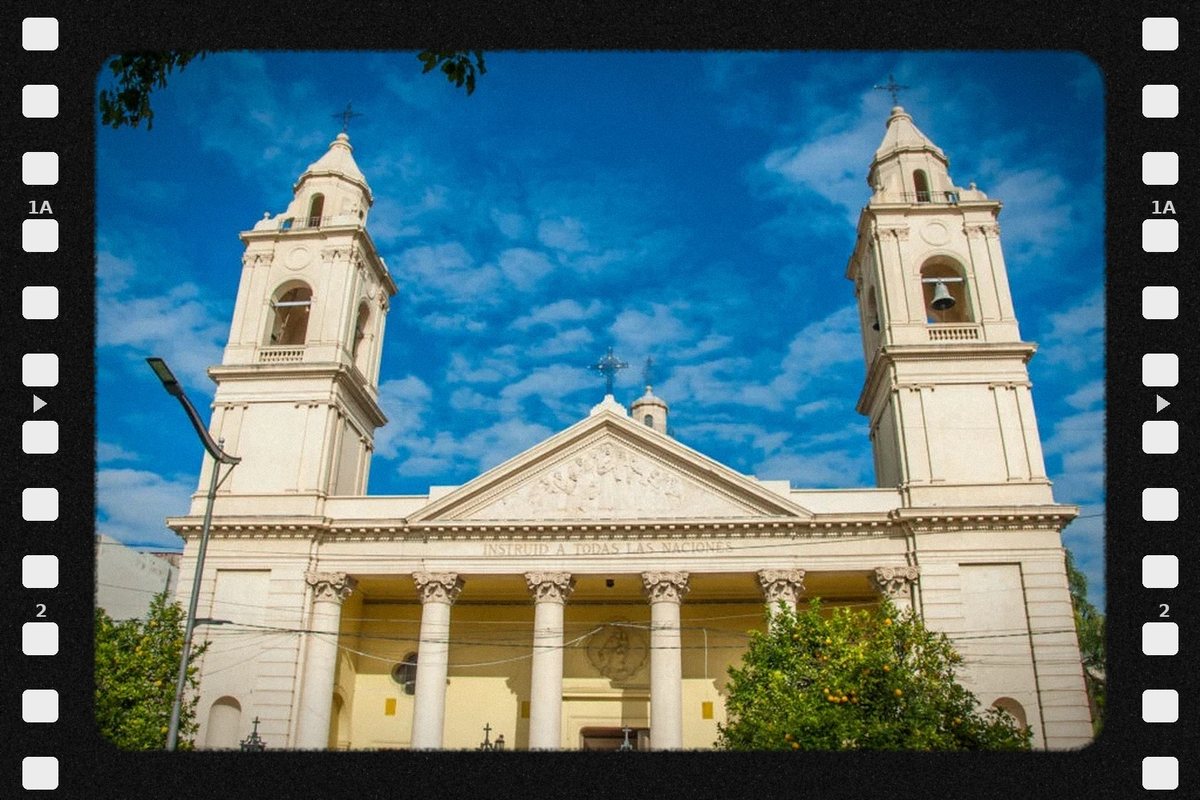
Santiago del Estero, Mother of Cities. The first founded on Argentine soil, in 1553, and the cradle of folklore. A forest of quebrachos and carob trees under an unforgiving sun, the Dulce River and the hot springs of Río Hondo. Here the chacarera is danced with the soul, the violin weeps through the night and Quichua is still alive in the voice of its people. Empanadas, peñas and salamancas. Santiago is not told: Santiago is felt in the chest. Santiago is the heart of Argentine folklore.

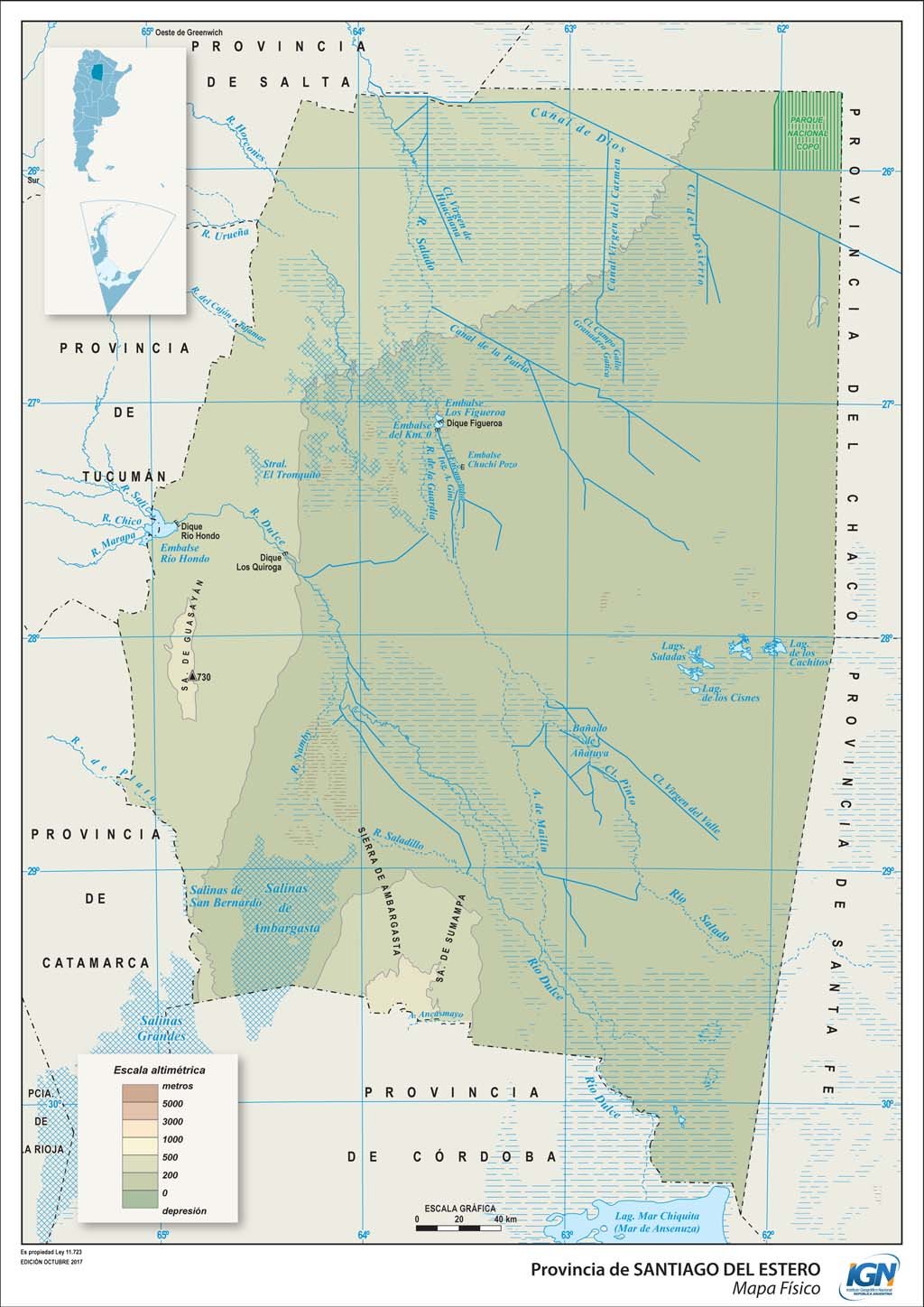
Political map · Source: IGN
- Capital
- Santiago del Estero
- Region
- Northwest
- Area
- 136,351 km²
- Population · 2022 Census
- 1,060,906 inhabitants · 7.8 hab/km²
- Women · Men
- 50.8 % · 49.2 %
- Median age
- 29 years
- By age
- 0 to 14 years: 25.4 % · 15 to 64 years: 65.6 % · 65 years and over: 9.0 %
- Climate
- Subtropical with a dry season, warm and semi-arid.
- Demonym
- santiagueño/a
- Founding of the capital
- 25 July 1553
- Status
- Province predating the 1853 National Constitution
- Departments
- 27
- Born in another province · abroad
- 11.6 % · 0.5 %
Sources: INDEC, 2022 National Census (final results) · INDEC / IGN (area) · Provincialization laws · IGN (political division).
- Mean annual temperature
- 20.6 °C
- Annual rainfall
- 652 mm
- Mean maximum · warmest month
- 34.2 °C · January
- Mean minimum · coldest month
- 4.9 °C · July
Source: Servicio Meteorológico Nacional (SMN), climatological standard normals 1991–2020, station Santiago del Estero Aero, submitted to the World Meteorological Organization.
- Main rivers
- Dulce · Salado
- Ecoregions
- Dry Chaco
- Main cities
- Santiago del Estero · La Banda · Termas de Río Hondo · Añatuya · Frías
Sources: Secretaría de Infraestructura y Política Hídrica de la Nación, river basins · Ministerio de Ambiente de la Nación, ecoregions of Argentina · INDEC, 2022 National Census (population by department).
- Hotel guests · 2024
- 387,050 in the surveyed towns: Termas de Río Hondo 260,007 · Santiago del Estero 127,043 · 0.9 % from abroad
- National park
- Copo
Sources: INDEC and Secretaría de Turismo de la Nación, Hotel Occupancy Survey (hotels and other lodgings) · Administración de Parques Nacionales.
- Airports · passengers 2025
- Vicecomodoro Ángel de la Paz Aragonés 219,659 · Internacional Termas de Río Hondo 17,227
- Scheduled flights · 2025
- Aeroparque 195,932 · Ezeiza 23,727 passengers
- National routes
- RN 9 · RN 16 · RN 34 · RN 64 · RN 89 · RN 98 · RN 157
Sources: Secretaría de Turismo de la Nación, Air connectivity, with ANAC data · Instituto Geográfico Nacional (IGN), national road network and international crossings.
- From Santiago del Estero to the City of Buenos Aires, by road
- 1,043 km
To the other provincial capitals, by road
- San Miguel de Tucumán 160 km
- San Fernando del Valle de Catamarca 212 km
- La Rioja 360 km
- Córdoba 430 km
- Salta 467 km
- San Salvador de Jujuy 500 km
- Santa Fe 607 km
- Resistencia 610 km
- Corrientes 633 km
- Paraná 638 km
- Formosa 776 km
- San Juan 810 km
- San Luis 850 km
- Posadas 948 km
- Mendoza 977 km
- Santa Rosa 1,030 km
- La Plata 1,184 km
- Neuquén 1,567 km
- Viedma 1,624 km
- Rawson 1,885 km
- Río Gallegos 3,065 km
- Ushuaia 3,658 km
Source: Government of the Argentine Republic (argentina.gob.ar), road distances between provincial capitals.
- National festivals
- Festival Nacional de la Chacarera · January
Sources: Ley nacional 26.924 · Res. ENATUR 391/1991.
- Share of the national economy · 2024
- 1.6 % · rank 11 of 24
- Growth 2004–2024
- +80 % · the country, +42 %
- Main activities
- Agriculture and livestock 28.9 % · Trade 26.5 % · Public administration 6.3 % · Transport 4.3 %
Source: ECLAC and Ministerio de Economía de la Nación, Provincial breakdown of gross value added, 2004 base (2023 and 2024, preliminary data).
Natural wealth
The territory that defines it
Santiago del Estero is the great plain of the dry Chaco: a forest of quebrachos, carob and mistol trees under an intense sun, crossed by the Dulce and Salado rivers, which give life to its wetlands. Copo National Park protects one of the last great forests of red quebracho, habitat of the giant armadillo and the giant anteater. To the west rise the Guasayán hills and stretch the Ambargasta salt flats; in the northwest, the hot springs of Termas de Río Hondo have made the city one of the best-known spa destinations in the country.
- Parque Nacional Copo (2000)
Source: Argentine National Parks Administration (SIB-APN).
Human wealth
The living figures
Santiago is the cradle of the chacarera and the creole violin, and the land where Santiago Quichua is still alive as a family language. Its festivals, peñas and salamancas sustain one of the richest folk traditions in the country, and the weavers of Atamisqui keep alive the art of the rug and the loom. At the table, Santiago-style empanadas, locro, tamales and spit-roasted kid goat, with the arrope and patay inherited from the forest.
- Before the conquest · the Tonocoté, Lule-Vilela and Sanavirón peoples inhabit the banks of the Dulce and Salado rivers
- 1553 · Francisco de Aguirre founds Santiago del Estero, the oldest city of Spanish origin in the country still standing. The expeditions that founded Tucumán, Córdoba, Salta and Jujuy set out from there: that is why it is the Mother of Cities
- 16th century · Quichua arrives as the language of conquest and evangelization; today Santiago Quichua is still alive in the countryside
- 1820 · Santiago del Estero becomes an autonomous province
- 2002 · Law 25,681 officially declares it the Mother City of Cities and Cradle of Folklore
Sources: Law 25,681 · Argentine Chamber of Deputies · Universidad Nacional de Santiago del Estero.
- Homero Manzi · tango lyrics · born in Añatuya (1907-1951), author of "Sur" and "Malena"
- Sixto Palavecino · music · violinist and keeper of Santiago Quichua
- Peteco Carabajal · music · of the Carabajal family, an emblem of the chacarera
- Los Manseros Santiagueños · music · folk group formed in 1959
Sources: careers published in national and provincial press.
28,022 people identify as Indigenous or as descendants of Indigenous or native peoples: 2.6 % of the province's population. They belong to 44 different peoples, and 9,202 (32.8 %) speak or understand the language of their people. The five largest peoples are:
- Tonokoté · 9,065
- Diaguita Cacano · 3,429
- Lule Vilela · 1,763
- Quechua · 1,145
- Diaguita · 901
Source: INDEC, 2022 National Population, Household and Housing Census, final results. Population in private dwellings.
Productive wealth
What it produces and exports
In recent decades Santiago del Estero has experienced a strong agricultural expansion: soybeans, corn and cotton, of which it is today the leading province by sown area. To that it adds cattle and goat farming and forestry from its native forest. China is today its main buyer, with more than 40 % of its exports.
USD 796 million, 25.4 % more than in 2024: 0.9 % of the national total and 15.9 % of the Northwest.
- Primary products · USD 731 M
- Manufactures of agricultural origin · USD 65 M
Main destinations: China (USD 348 M, 43.7 %), Vietnam (USD 57 M), Middle East (USD 51 M) and European Union (USD 42 M). Main products: cereals (USD 321 M), oilseeds and oleaginous fruits (USD 283 M), unprocessed vegetables and pulses (USD 81 M) and meat and meat preparations (USD 63 M).
Source: INDEC, Provincial origin of exports. Goods. Year 2025 (provisional data) and annex tables.
251,900 hectares sown in the 2024/25 season: 37.9 % of the country's cotton area (665,300 hectares) and the largest area of any province.
Source: Argentine Secretariat of Agriculture, Livestock and Fisheries, Cotton bulletin, 2024/25 season.
1,129,611 head as of 31 December 2024: 2.2 % of the national cattle stock.
Source: SENASA, stock as of 31/12/2024, in Secretariat of Agriculture, Provincial cattle profile 2024.
CONICET has four research units in the province, among them the Institute for Social Development Studies (INDES), together with the Universidad Nacional de Santiago del Estero.
Source: CONICET, 2025 Management Report.
Space to embed one or more 45s–1min capsules about the province.
To experience it on the ground — restaurants, hotels, events, geolocation — the app.
Open the Argentina al Mundo app