Argentina
Argentina. From the Puna to Antarctica, from the roar of Iguazú to the silence of the glaciers, from Aconcagua to the Argentine Sea. Twenty-four provinces, each with its own landscape, its microclimates, its accent and its flavor. Rainforests, deserts, mountains, the endless pampa and a unique Patagonia. Mate and wine to share, the asado that brings people together, tango and chacarera. A passionate people, made of Indigenous peoples and immigrants from all over the world. Argentina cannot be explained: it must be lived. Argentina is a country that embraces you.
The territory
Geography, scale, extremes
Continental Argentina covers 2,780,085 km², excluding Antarctica and the South Atlantic Islands, and is organized into 23 provinces and the Autonomous City of Buenos Aires. Buenos Aires is the largest, with 307,571 km², followed by Santa Cruz; Tucumán, with 22,524 km², is the smallest.
It is a country of extremes. In Mendoza rises Aconcagua, 6,961 meters high, the highest mountain in the Americas. In Catamarca, Ojos del Salado is the highest volcano in the world. In Santa Cruz, the Southern Patagonian Ice Field is the largest continental ice reserve in the southern hemisphere outside Antarctica. And CABA faces the Río de la Plata, the widest estuary in the world.
Twelve sites in the country are on UNESCO’s World Heritage List, five of them natural. The profiles also record 39 national parks and 24 wetlands of international importance. Details in Natural wealth.
Sources: INDEC / IGN (area) · UNESCO, World Heritage List · National Parks Administration · Ramsar Sites Network · the atlas’s provincial profiles.
Bicontinental Argentina
America, Antarctica and the South Atlantic Islands
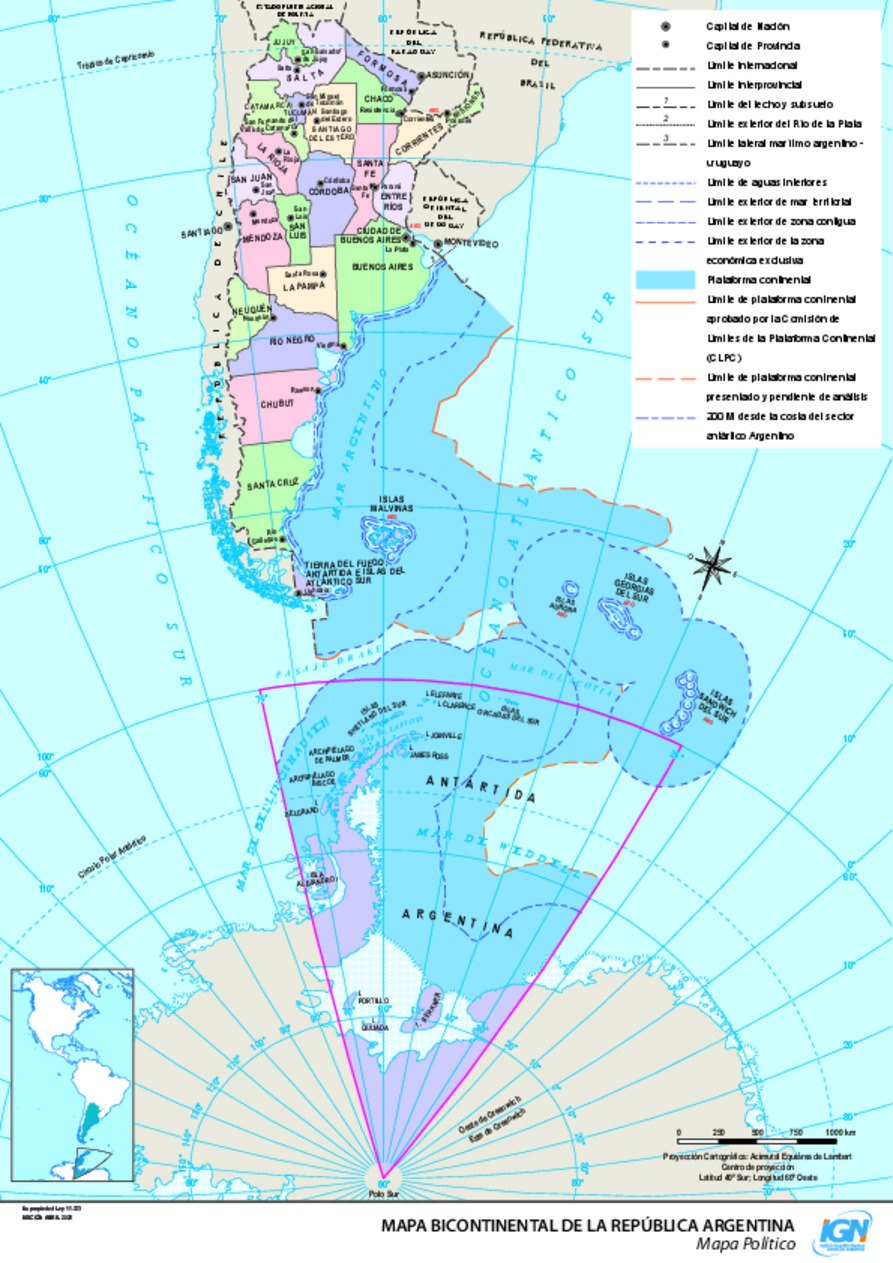
The Argentine Republic is a bicontinental country: it has territory in America and in Antarctica. Its total area is 3,669,711 km². Continental Argentina in America accounts for 2,780,085 km²; the Argentine Antarctic Sector, 873,718 km², including the South Orkney Islands; and the South Atlantic islands (Malvinas, South Georgia and South Sandwich), 15,908 km². All of that southern territory is part of the province of Tierra del Fuego, Antártida e Islas del Atlántico Sur.
Since 2010, Ley 26.651 has made the bicontinental map of the Argentine Republic, produced by the Instituto Geográfico Nacional, mandatory at every level of education and in public bodies. The National Constitution ratifies Argentina’s legitimate and imprescriptible sovereignty over the Malvinas, South Georgia and South Sandwich Islands and the corresponding maritime and insular areas. The two largest islands of the Malvinas are Soledad, 6,353 km², and Gran Malvina, 4,377 km². The full story is in The Malvinas are Argentine.
- Permanent: Belgrano II (1979), Carlini (1953), Esperanza (1952), Marambio (1969), Orcadas (1904), Petrel (1952), San Martín (1951).
- Seasonal: Brown (1951), Cámara (1953), Decepción (1948), Matienzo (1961), Melchior (1947), Primavera (1977).
Orcadas, opened on 22 February 1904, is the oldest continuously staffed base in Antarctica.
Sources: Instituto Geográfico Nacional (IGN), Area report, Antarctic bases and Maritime islands · Ley 26.651 · National Constitution, first transitional provision.
Malvinas Islands
The Malvinas are Argentine
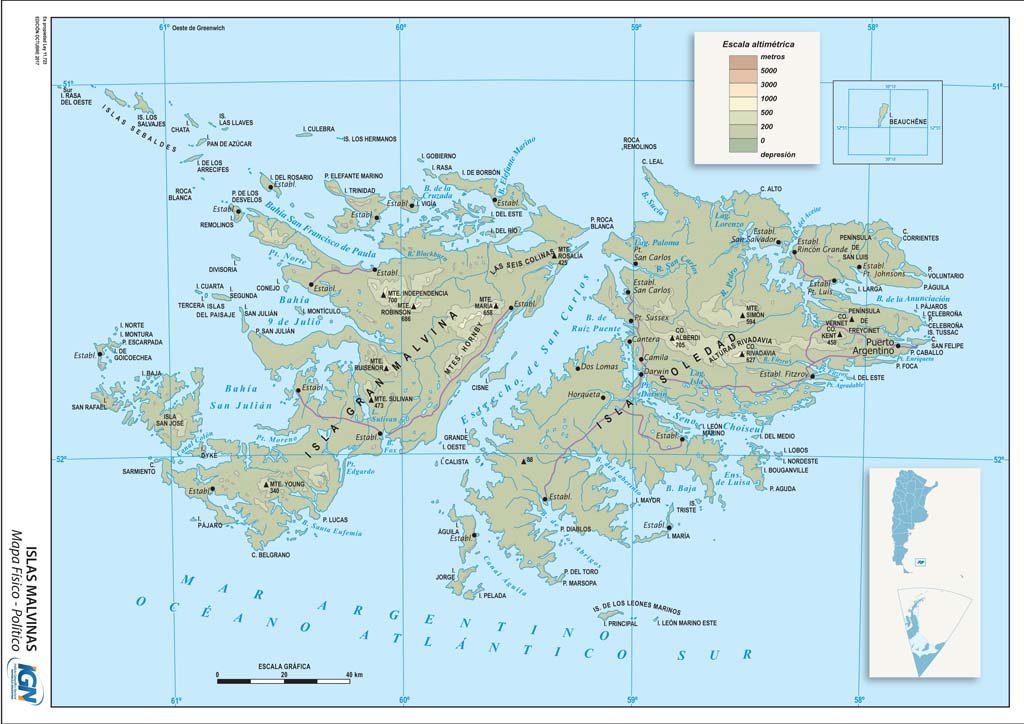
The Malvinas Islands are part of the territory of the Argentine Republic. Spain administered them from Buenos Aires during the colonial period, and Argentina inherited them with its independence. On 6 November 1820, Colonel David Jewett took possession of them on behalf of the United Provinces of the Río de la Plata, and on 10 June 1829 the government of Buenos Aires created the Political and Military Command of the Malvinas Islands, headed by Luis Vernet.
On 3 January 1833, a British naval force expelled the Argentine authorities and occupied the islands by force. Since then, for almost two centuries, the United Kingdom has maintained that occupation, and Argentina has never stopped claiming them: it protested that same year and has upheld the claim under every government, to this day.
In 1965, the United Nations General Assembly, in resolution 2065 (XX), recognized the existence of a sovereignty dispute between Argentina and the United Kingdom and called on both countries to negotiate a peaceful solution. Since 1983, the UN Special Committee on Decolonization has repeated that call every year; the most recent, on 25 June 2026, was adopted by consensus. The Organization of American States has taken the same position. Argentina maintains that the principle of self-determination does not apply to this case, because the islands’ population was implanted after the 1833 occupation.
Between 2 April and 14 June 1982, Argentina and the United Kingdom fought the Malvinas War. 649 Argentines died, 323 of them in the sinking of the cruiser ARA General Belgrano, attacked on 2 May outside the exclusion zone set by the United Kingdom itself. Under Ley 25.370, every 2 April is the Day of the Veterans and the Fallen in the Malvinas War, and under Ley 20.561, every 10 June is the Day of Affirmation of Argentine Rights over the Malvinas, Islands and Antarctic Sector.
Since 1994, the National Constitution, in its first transitional provision, states that the Argentine Nation ratifies its legitimate and imprescriptible sovereignty over the Malvinas, South Georgia and South Sandwich Islands and the corresponding maritime and insular areas, as an integral part of the national territory, and that their recovery and the full exercise of sovereignty, respecting the way of life of their inhabitants and in accordance with international law, are a permanent and unrenounceable goal of the Argentine people.
- 1820 · on 6 November, David Jewett takes possession of the islands on behalf of the United Provinces of the Río de la Plata
- 1829 · on 10 June, the Political and Military Command of the Malvinas Islands is created, headed by Luis Vernet
- 1833 · on 3 January, British forces expel the Argentine authorities and occupy the islands
- 1965 · the UN recognizes the sovereignty dispute in resolution 2065 (XX) and calls for negotiations
- 1982 · from 2 April to 14 June, the Malvinas War; 649 Argentines fallen
- 1994 · the constitutional reform enshrines the claim as a permanent and unrenounceable goal
- 2026 · on 25 June, the UN Special Committee on Decolonization again calls for negotiations, by consensus
Sources: Ministerio de Relaciones Exteriores, Comercio Internacional y Culto (Argentine Foreign Ministry), Malvinas Question · United Nations, General Assembly, resolution 2065 (XX), and Special Committee on Decolonization · National Constitution, first transitional provision · Leyes 25.370 and 20.561 · Ministerio de Defensa · IGN (map).
Distances
The country and the world, in kilometers
Between provincial capitals, by road. Each row shows the distance from that capital, according to the official information published by each province.
| km | Jujuy | Salta | Formosa | Tucumán | Posadas | Resistencia | Corrientes | Sgo. del Estero | Catamarca | La Rioja | Córdoba | San Juan | Santa Fe | Paraná | Mendoza | San Luis | CABA | La Plata | Santa Rosa | Neuquén | Viedma | Rawson | Río Gallegos | Ushuaia |
|---|---|---|---|---|---|---|---|---|---|---|---|---|---|---|---|---|---|---|---|---|---|---|---|---|
| Jujuy | — | 99 | 960 | 340 | 1,198 | 860 | 883 | 500 | 572 | 770 | 930 | 1,220 | 1,107 | 1,138 | 1,345 | 1,320 | 1,543 | 1,645 | 1,530 | 2,200 | 2,124 | 2,385 | 3,565 | 4,158 |
| Salta | 99 | — | 948 | 307 | 1,118 | 780 | 803 | 467 | 539 | 695 | 897 | 1,145 | 1,074 | 1,105 | 1,227 | 1,245 | 1,510 | 1,614 | 1,497 | 2,082 | 2,091 | 2,352 | 3,532 | 4,125 |
| Formosa | 960 | 948 | — | 936 | 506 | 168 | 191 | 776 | 988 | 1,136 | 1,043 | 1,543 | 713 | 744 | 1,710 | 1,463 | 1,191 | 1,253 | 1,523 | 2,060 | 2,117 | 2,378 | 3,558 | 4,151 |
| Tucumán | 340 | 307 | 936 | — | 1,106 | 765 | 791 | 160 | 232 | 388 | 590 | 838 | 767 | 798 | 1,005 | 938 | 1,203 | 1,309 | 1,190 | 1,860 | 1,784 | 2,045 | 3,225 | 3,818 |
| Posadas | 1,198 | 1,118 | 506 | 1,106 | — | 338 | 315 | 948 | 1,160 | 1,308 | 1,213 | 1,758 | 883 | 820 | 1,925 | 1,633 | 1,040 | 1,061 | 1,660 | 2,198 | 2,000 | 2,495 | 3,675 | 4,268 |
| Resistencia | 860 | 780 | 168 | 768 | 338 | — | 23 | 610 | 822 | 970 | 875 | 1,420 | 545 | 576 | 1,587 | 1,295 | 1,023 | 996 | 1,475 | 2,012 | 2,069 | 2,210 | 3,390 | 3,983 |
| Corrientes | 883 | 803 | 191 | 791 | 315 | 23 | — | 633 | 845 | 993 | 898 | 1,398 | 568 | 590 | 1,565 | 1,318 | 940 | 978 | 1,378 | 1,989 | 2,046 | 2,187 | 3,367 | 3,960 |
| Sgo. del Estero | 500 | 467 | 776 | 160 | 948 | 610 | 633 | — | 212 | 360 | 430 | 810 | 607 | 638 | 977 | 850 | 1,043 | 1,184 | 1,030 | 1,567 | 1,624 | 1,885 | 3,065 | 3,658 |
| Catamarca | 572 | 539 | 988 | 232 | 1,160 | 822 | 855 | 212 | — | 156 | 440 | 606 | 770 | 801 | 773 | 705 | 1,155 | 1,188 | 1,040 | 1,588 | 1,634 | 1,895 | 3,075 | 3,668 |
| La Rioja | 770 | 695 | 1,136 | 388 | 1,308 | 970 | 993 | 360 | 156 | — | 435 | 450 | 765 | 796 | 617 | 550 | 1,150 | 1,189 | 1,035 | 1,472 | 1,629 | 1,890 | 3,070 | 3,663 |
| Córdoba | 930 | 897 | 1,043 | 590 | 1,213 | 875 | 898 | 430 | 440 | 435 | — | 500 | 330 | 361 | 670 | 420 | 715 | 757 | 600 | 1,137 | 1,194 | 1,455 | 2,635 | 3,228 |
| San Juan | 1,220 | 1,145 | 1,543 | 838 | 1,758 | 1,420 | 1,398 | 810 | 606 | 450 | 500 | — | 830 | 861 | 167 | 320 | 1,110 | 1,213 | 825 | 1,022 | 1,419 | 1,680 | 2,860 | 3,453 |
| Santa Fe | 1,107 | 1,074 | 713 | 767 | 883 | 545 | 568 | 607 | 770 | 765 | 330 | 830 | — | 31 | 885 | 625 | 478 | 527 | 810 | 1,347 | 1,404 | 1,665 | 2,845 | 3,438 |
| Paraná | 1,138 | 1,105 | 744 | 798 | 820 | 576 | 590 | 638 | 801 | 796 | 361 | 861 | 31 | — | 916 | 656 | 480 | 555 | 841 | 1,378 | 1,435 | 1,696 | 2,876 | 3,469 |
| Mendoza | 1,345 | 1,227 | 1,710 | 1,005 | 1,925 | 1,587 | 1,565 | 977 | 773 | 617 | 670 | 167 | 885 | 916 | — | 260 | 1,050 | 1,152 | 765 | 855 | 1,359 | 1,620 | 2,800 | 3,393 |
| San Luis | 1,320 | 1,245 | 1,463 | 938 | 1,633 | 1,295 | 1,318 | 850 | 705 | 550 | 420 | 320 | 625 | 656 | 260 | — | 790 | 894 | 505 | 883 | 1,099 | 1,360 | 2,540 | 3,133 |
| CABA | 1,543 | 1,510 | 1,191 | 1,203 | 1,040 | 1,023 | 940 | 1,043 | 1,155 | 1,150 | 715 | 1,110 | 478 | 480 | 1,050 | 790 | — | 61 | 620 | 1,158 | 960 | 1,455 | 2,635 | 3,228 |
| La Plata | 1,645 | 1,614 | 1,253 | 1,309 | 1,061 | 996 | 978 | 1,184 | 1,188 | 1,189 | 757 | 1,213 | 527 | 555 | 1,152 | 894 | 61 | — | 670 | 1,197 | 957 | 1,414 | 2,551 | 3,132 |
| Santa Rosa | 1,530 | 1,497 | 1,523 | 1,190 | 1,660 | 1,475 | 1,378 | 1,030 | 1,040 | 1,035 | 600 | 825 | 810 | 841 | 765 | 505 | 620 | 670 | — | 537 | 594 | 855 | 2,035 | 2,628 |
| Neuquén | 2,200 | 2,082 | 2,060 | 1,860 | 2,198 | 2,012 | 1,989 | 1,567 | 1,588 | 1,472 | 1,137 | 1,022 | 1,347 | 1,378 | 855 | 883 | 1,158 | 1,197 | 537 | — | 660 | 750 | 1,930 | 2,523 |
| Viedma | 2,124 | 2,091 | 2,117 | 1,784 | 2,000 | 2,069 | 2,046 | 1,624 | 1,634 | 1,629 | 1,194 | 1,419 | 1,404 | 1,435 | 1,359 | 1,099 | 960 | 957 | 594 | 660 | — | 495 | 1,675 | 2,268 |
| Rawson | 2,385 | 2,352 | 2,378 | 2,045 | 2,495 | 2,210 | 2,187 | 1,885 | 1,895 | 1,890 | 1,455 | 1,680 | 1,655 | 1,696 | 1,620 | 1,360 | 1,455 | 1,414 | 855 | 750 | 495 | — | 1,180 | 1,773 |
| Río Gallegos | 3,565 | 3,532 | 3,558 | 3,225 | 3,675 | 3,390 | 3,367 | 3,065 | 3,075 | 3,070 | 2,635 | 2,860 | 2,845 | 2,876 | 2,800 | 2,540 | 2,635 | 2,551 | 2,035 | 1,930 | 1,675 | 1,180 | — | 593 |
| Ushuaia | 4,158 | 4,125 | 4,151 | 3,818 | 4,268 | 3,983 | 3,960 | 3,658 | 3,668 | 3,663 | 3,228 | 3,453 | 3,438 | 3,469 | 3,393 | 3,133 | 3,228 | 3,132 | 2,628 | 2,523 | 2,268 | 1,773 | 593 | — |
Source: Government of the Argentine Republic (argentina.gob.ar), road distances between provincial capitals. Three errata in those tables were corrected with the value given by the destination province: Córdoba–Río Gallegos, City of Buenos Aires–Río Gallegos and La Plata–Rawson.
- Brasilia Brazil · 2,333 km
- Washington United States · 8,362 km
- New York United States · 8,492 km
- Madrid Spain · 10,020 km
- Paris France · 11,025 km
- London United Kingdom · 11,102 km
- Rome Italy · 11,131 km
- Berlin Germany · 11,887 km
- Tel Aviv Israel · 12,209 km
- Ankara Türkiye · 12,465 km
- Riyadh Saudi Arabia · 12,848 km
- Moscow Russia · 13,459 km
- Jakarta Indonesia · 15,229 km
- New Delhi India · 15,794 km
- Dhaka Bangladesh · 16,779 km
- Hanoi Vietnam · 17,859 km
- Tokyo Japan · 18,382 km
- Beijing China · 19,264 km
- Seoul South Korea · 19,436 km
- Malvinas Islands (Puerto Argentino) 1,899 km
- Ushuaia 2,373 km
- Base Esperanza 3,203 km
- Base Marambio 3,298 km
Straight-line distances (geodesic, WGS84 ellipsoid), calculated by Explora Nuestras Provincias y sus Riquezas from Plaza de Mayo to the center of each city. Coordinates of the Antarctic bases: IGN.
The people
Who makes it today
Argentina has 45,892,285 inhabitants, according to the 2022 National Census. The province of Buenos Aires is home to four in ten, with 17,523,996; Tierra del Fuego is the least populated, with 185,732. Density ranges from 15,608.5 inhabitants per km² in CABA to 1.4 in Santa Cruz.
1,306,730 people identify as Indigenous or as descendants of Indigenous or native peoples. In Jujuy and Salta they are one in ten inhabitants, and in Formosa, 86.9% of them speak or understand the language of their people. On that root, immigrants from all over the world founded colonies, cities and traditions. Details in Human wealth.
Source: INDEC, 2022 National Population, Household and Housing Census, final results. Indigenous peoples: population in private dwellings.
What it produces
Economic structure and exports
Buenos Aires, Santa Fe and Córdoba together account for 67.5% of the country’s goods exports: USD 31,684, 16,190 and 10,913 million in 2025. Santa Fe is the heart of Argentina’s oilseed complex and Córdoba an agro-industrial engine with an automotive hub.
Each region adds its own: the wine of Mendoza, the yerba mate and tea of Misiones, the rice of Corrientes, the sugar and lemons of Tucumán, the fruit of the Alto Valle, South Atlantic fishing and the energy of Neuquén, today the country’s leading oil and gas producer. The full ranking is in Productive wealth.
Source: INDEC, Provincial origin of exports. Goods. 2025 (provisional data). Mining and hydrocarbon data are included for informational purposes only; Explora Nuestras Provincias y sus Riquezas does not promote extractive activity.
What it thinks
Culture, science, letters
Argentine science has its main hubs in CABA, with 76 CONICET research units, Buenos Aires (75), Córdoba (41), Santa Fe (29) and Tucumán (17). Bernardo Houssay and César Milstein won the Nobel Prize in Medicine in 1947 and 1984. Santa Fe developed the HB4 technology, the basis of the world’s first approved drought-tolerant wheat, and in Bariloche INVAP has built satellites and research nuclear reactors for other countries.
In letters, Jorge Luis Borges, Ernesto Sabato and Tomás Eloy Martínez; in graphic humor, Quino, creator of Mafalda; in music, Mercedes Sosa; in tango, Astor Piazzolla and Homero Manzi, author of "Sur" and "Malena". Tango was born in Buenos Aires, Santiago del Estero is the cradle of chacarera and Corrientes, the land of chamamé.
Everyone who gave something to the world, from Nobel Prizes to sport and salsa golf, in Argentines who gave to the world.
Sources: CONICET, Management Report 2025 · INVAP · National Atomic Energy Commission · the atlas’s provincial profiles.